Black tarmac is the default for a reason. It works, it’s straightforward, and most people don’t think twice about it. But coloured tarmac has come a long way in the past decade, and the range of options available now means there are genuinely good reasons to consider something different. Whether you want a surface that complements your brickwork, adds some kerb appeal before a sale, or just looks a bit more considered than the standard finish, there are ideas here worth thinking about. If you decide you want to take it further, our tarmac driveways page covers the full installation process and what to expect.
Red and Terracotta: The Most Popular Choice
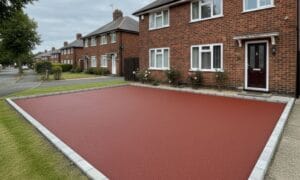
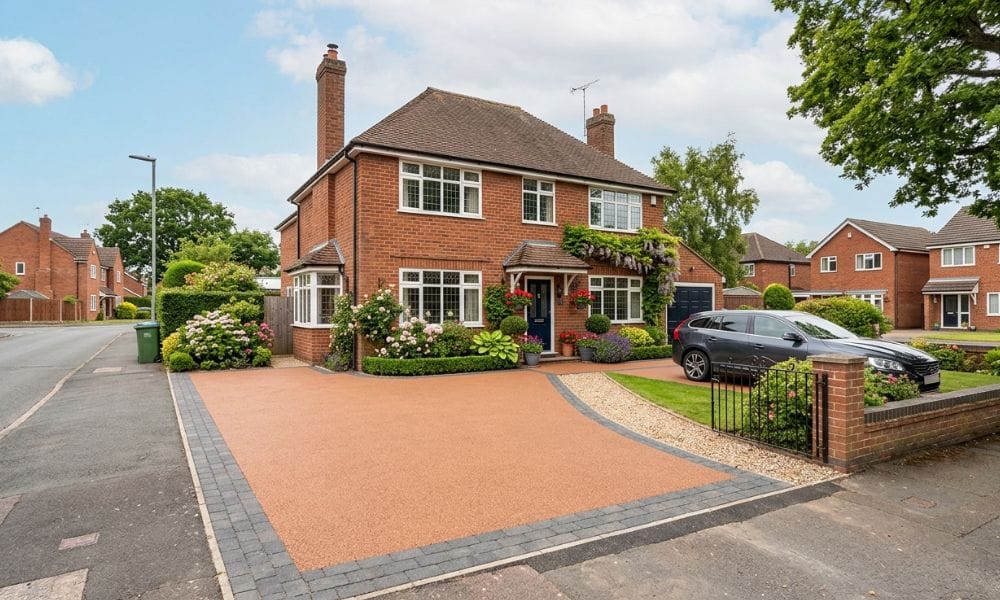
Ask any installer in the Stoke-on-Trent and Staffordshire area what colour homeowners go for most often and the answer is always the same: red. Classic red tarmac works particularly well with the red-brick housing stock that makes up the majority of properties across the region. It does not fight with the building. It sits naturally, and the overall effect reads as deliberate rather than decorative.
Terracotta is the subtler cousin. It has more brown in it, less saturation, and it works better on older properties where classic red might feel a bit sharp. Victorian and Edwardian houses with weathered brick respond well to terracotta. Post-war semis tend to suit classic red better.
One thing worth knowing about both: the colour fades gradually over time as the surface weathers. Reds hold their tone better than most other options in the coloured tarmac range, but some softening over five to ten years is normal. A quality sealant applied every few years helps considerably.
Grey Tarmac: The Fast-Growing Option
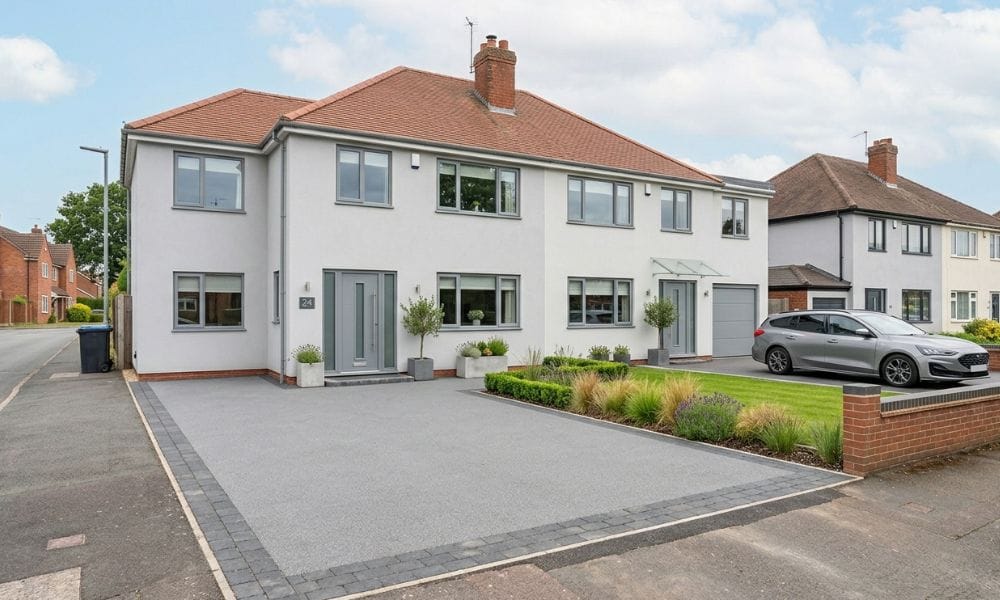
Mid grey has become the most popular choice for new builds and recently rendered properties, particularly in the Stafford and Crewe areas where a lot of contemporary housing has gone up in the past ten years. Against grey render or painted facades, it looks clean and intentional. It does not create the stark contrast that red tarmac would in the same situation.
Light grey is at the softer end, working well with pale brick or stone. Dark grey sits close to standard black but reads as more refined. For anyone who likes the practicality of black tarmac but wants something slightly more considered, dark grey is a low-risk way to get there.
Grey options also photograph well, which matters if you are thinking about kerb appeal ahead of a property sale. Estate agent photos on grey-tarmac driveways tend to look sharper than the same shot on weathered black.
Buff and Quartzite: Natural Tones for Older Properties
If your property is stone-built, or sits in a rural or semi-rural setting around the Staffordshire Moorlands or the Cheshire countryside, buff and quartzite tones tend to fit more naturally than any of the bolder colours.
Buff tarmac has a warm sandy quality that echoes sandstone and light brick without trying to replicate it. It sits quietly in the landscape rather than drawing attention. Buff quartzite has a slightly richer, more golden character, with visible stone texture that adds some depth to the surface.
Both are popular choices for driveways where the homeowner wants something that looks less like a standard driveway and more like a considered surface choice. They work particularly well when the border edging is also kept in natural tones rather than going for the charcoal contrast that suits red and grey tarmac.
Border Edging: Where the Design Comes Together
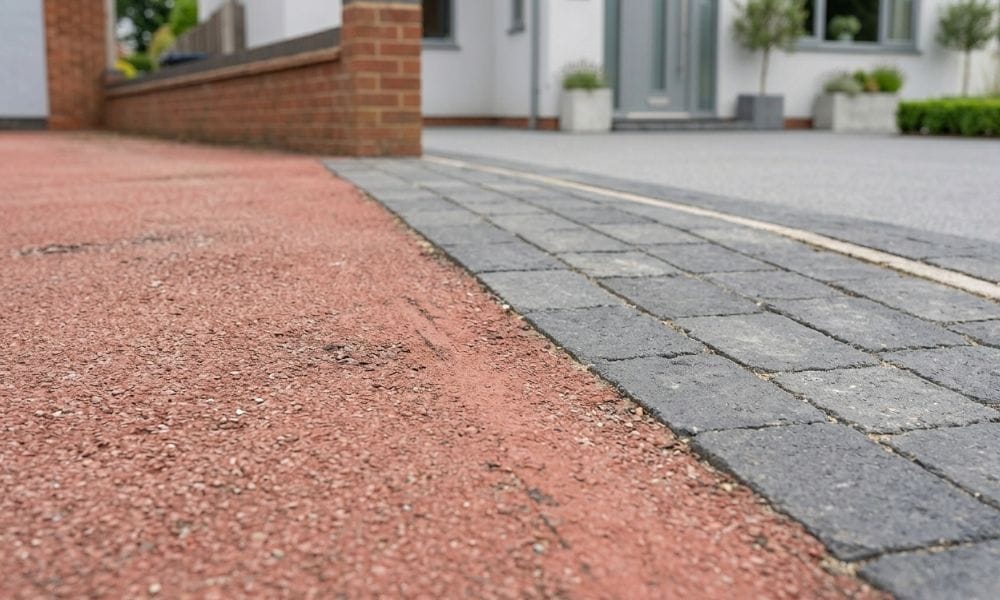
The tarmac surface gets most of the attention but the border does a lot of the visual work. A coloured tarmac driveway with a well-chosen edge looks substantially better than the same surface with a plain concrete kerbstone.
Charcoal block paving is the most commonly used border option. It grounds the surface and creates a clean definition between the driveway and the garden or path. For red and terracotta tarmac, charcoal edging is hard to beat. The contrast is crisp and the darker tone stops the red from looking overwhelming on larger driveways.
For buff and quartzite surfaces, a natural sandstone block paving border often works better than charcoal. The tones sit together rather than competing, which is the right approach for properties where the overall aesthetic is calm and traditional.
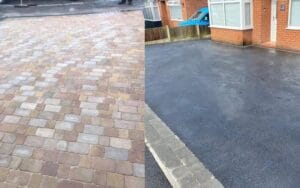
Granite setts are another option worth considering. They add a premium look and are particularly good on period properties where block paving might feel slightly too contemporary. Our charcoal block paving project in Trentham gives a good example of how a well-chosen border transforms the finished result.
Combining Coloured Tarmac with Other Surfaces
Tarmac does not have to cover the entire frontage. Some of the most interesting residential driveway work uses coloured tarmac as the main surface with a different material for the pathway or the area immediately outside the front door.
A classic combination is red or buff tarmac for the parking area with an Indian stone pathway running to the door. The tarmac handles the practical load-bearing job and the stone gives the entrance a more considered finish. It works particularly well on detached and semi-detached houses where there is enough frontage to make the distinction between the two areas feel natural rather than awkward.
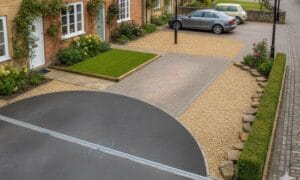
Block paving inserts within a tarmac surface are another option that comes up occasionally, usually as a decorative feature across the width of the driveway or around a central planted feature. Done well it looks good. Done badly it looks patchy. It requires a confident installer and a clear design idea before work starts.
For anyone exploring surfaces beyond tarmac, our block paving driveways and tegula paving pages cover those options in more detail.
Which Colour Works Best for Your Property Type?
There is no universal right answer, but there are some reliable patterns.
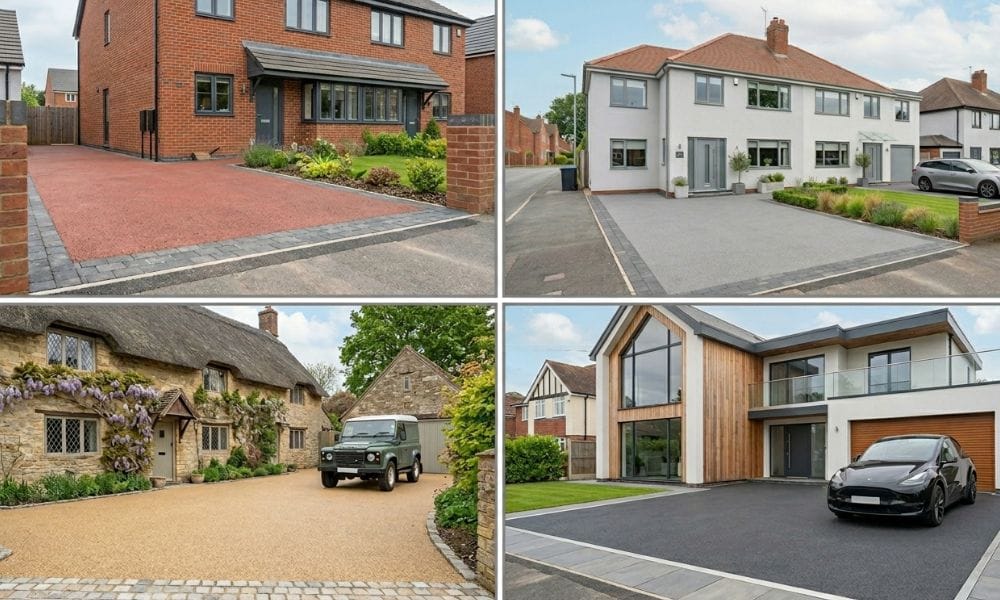
Red brick houses: Classic red or terracotta tarmac. Charcoal block paving border. Works across post-war semis, Edwardian terraces and detached houses alike.
Rendered or painted properties: Mid grey or light grey. Keeps things clean and contemporary. Red tarmac usually clashes on these.
Stone-built or rural properties: Buff or buff quartzite. Natural sandstone border if possible. Avoids the contrast that looks out of place in rural settings.
New builds with mixed materials: Dark grey is a safe starting point. It works across most modern exterior finishes and ages better than lighter options in areas with heavy traffic.
Properties with no strong architectural character: Mid grey or dark grey. Neutral enough to work without needing to match anything specific.
If you want to go deeper on the full colour range, fade rates, and how different options perform over time, our complete guide to coloured tarmac driveways covers all of that in detail.
Planning Permission and Coloured Tarmac
The colour you choose has no effect on whether planning permission is required. The rules are the same for all tarmac installations regardless of finish.
For most residential driveways, permitted development rights cover the work without needing permission. The drainage rules are the main thing to check: if the surface is impermeable and would direct water onto the public highway, you may need to apply for permission or use a permeable surface specification. If your property is in a conservation area in Stoke-on-Trent or Stafford, it is worth a quick check with the local authority before committing to a colour. Some conservation areas have guidance on surface materials and, less commonly, on colours.
Our full guide to planning permission for tarmac driveways covers the rules in detail.
Frequently Asked Questions
What is the most popular colour for tarmac driveways?
Classic red is consistently the most popular choice for residential coloured tarmac driveways across the UK, particularly in areas like Stoke-on-Trent and Staffordshire where red brick housing is common. Terracotta runs close behind for older properties. Mid grey has grown significantly in popularity over the past few years, especially on new builds and rendered properties where warmer tones would clash with the exterior.
Can you mix coloured tarmac with block paving on the same driveway?
Yes, and it can look very good when done properly. The most common approach is to use block paving as a border around the tarmac surface, which adds definition and frames the driveway. Some installations also use block paving inserts within the tarmac as a decorative feature. Both require careful planning before work starts so the design feels intentional rather than patched together.
Does coloured tarmac cost more than standard black?
Yes, typically around 15 to 25 per cent more. The premium comes from the cost of the coloured aggregate used in the surface layer and the additional care required during installation to achieve a consistent finish. For a typical double driveway, that usually means an extra £600 to £1,000 over the black tarmac price. The structural build of the driveway is identical regardless of colour.
Will coloured tarmac suit my house if it has a grey render or modern finish?
Grey render works best with grey tarmac rather than red or buff tones. The contrast between a warm-coloured tarmac and a cool grey render tends to look harsh, with neither surface flattering the other. Mid grey or light grey tarmac gives a much cleaner result on rendered properties. If the render has any beige or warm stone tones, buff tarmac can also work well.
How do I choose the right coloured tarmac for my property?
Start with the exterior material of the house. Red or buff brick suits warm-toned tarmac. Grey render or painted exteriors suit grey tarmac. Stone-built properties work well with buff or quartzite tones. Then consider the border: charcoal block paving works with most colours but looks particularly good with red, while natural stone borders suit buff and quartzite better. If possible, look at installed examples in your area before deciding. Colour samples on a card can look quite different from a full driveway in natural daylight.