If you’ve been searching for a straight answer on tarmac driveway costs, you’ve probably noticed that prices vary quite a bit depending on who you ask. Some websites quote figures that look suspiciously low, others seem high, and most don’t explain why. This guide cuts through that and gives you a realistic picture of what UK homeowners are paying in 2026, what pushes the price up, and what to watch for when you’re comparing quotes. Our team installs tarmac driveways across Stoke-on-Trent, Staffordshire and Crewe, and we’ve written this to help you budget properly before you pick up the phone.
TL;DR
- UK tarmac driveway costs typically range from £60 to £110 per square metre for a full installation
- A single-car driveway (around 20sqm) costs roughly £1,200 to £2,200
- A double driveway (around 40sqm) typically comes in between £2,400 and £4,400
- Groundwork, access, driveway size and base condition all affect the final figure
- Coloured tarmac costs around 10 to 20% more than standard black
- All prices in this guide are a reference point, not a firm quote. Raw material costs fluctuate, and every project is different
What Does Tarmac Cost Per Square Metre in the UK?
Across the UK, a fully installed tarmac driveway typically costs somewhere between £60 and £110 per square metre in 2026. That range covers materials, labour and standard sub-base preparation. You may see lower figures quoted online, sometimes as low as £45/sqm, but these usually refer to resurfacing work on an existing solid base rather than a full installation.
The size of your driveway is the biggest pricing factor. Smaller jobs carry a higher cost per square metre because a two-person crew, plant hire and material delivery all cost roughly the same whether they’re covering 20sqm or 80sqm. Spread those fixed costs across a bigger area and the rate per square metre comes down noticeably.
Location plays a role too. Contractors in London and the South East typically charge 10 to 20% more than those in the Midlands and the North. For homeowners in Stoke-on-Trent, Stafford, Crewe and the surrounding areas of Staffordshire, you’re in a reasonable position on pricing compared to many parts of the country.
Resurfacing an existing driveway where the base is still solid is considerably cheaper than a full dig-out and new installation. If your current tarmac is just looking tired but structurally sound underneath, expect to pay somewhere around £40 to £55 per square metre for an overlay rather than a complete replacement.
Tarmac Driveway Cost by Size: A UK Price Guide
The table below gives a realistic cost guide based on current UK market rates. These figures assume a standard full installation including sub-base preparation.
| Driveway Size | Approximate Area | Estimated Cost Range |
|---|---|---|
| Single car | ~20sqm | £1,200 – £2,200 |
| Double car | ~40sqm | £2,400 – £4,400 |
| Large / triple | ~60sqm | £3,600 – £6,600 |
| Very large | ~80sqm | £4,800 – £8,800 |
These are guide prices only. Your actual quote will depend on access to the site, the condition of the existing surface, drainage requirements and local labour rates at the time of installation. Tarmac is a petroleum-based product, so raw material costs can shift when fuel prices move. Always ask your contractor whether their quote is fixed or subject to material cost changes before work begins.
If you’re comparing tarmac against other surfaces on cost, our guide on whether block paving or tarmac is cheaper goes into detail on how the two options stack up in real terms.
What Affects the Cost of a Tarmac Driveway?
A lot can push a quote higher or lower than the averages above. Here are the main factors:
Driveway size and shape
Straightforward rectangular driveways are the most cost-effective to install. Curves, awkward angles, or driveways that need to work around obstacles all take longer to lay and generate more material waste. Both add to the final cost. An irregular shape on a small driveway can make the rate per square metre jump noticeably.
Access to the site
If a lorry can pull up close, delivery and waste removal are straightforward. Difficult access, narrow entries, steep drops or work near busy roads all add time and therefore cost. This catches some homeowners off guard, particularly in older terraced streets around parts of Stoke-on-Trent and Crewe where space can be genuinely tight.
Condition of the existing base
This is often the biggest variable in any tarmac quote. If the base beneath your current surface is solid, a new layer of tarmac can go straight over the top of it. If it’s crumbling, waterlogged or poorly laid from the start, excavation is needed. That means machinery, a skip or two, and additional labour. A reputable contractor will tell you upfront whether dig-out is required rather than discovering it partway through the job.
Drainage requirements
Since 2008, driveways over 5 square metres that direct surface water onto the public highway rather than absorbing it on your own land may require planning permission. Good drainage at installation stage prevents problems further down the line. If channel drains or soakaways are part of the work, these will appear as separate line items on a properly itemised quote.
Coloured tarmac
Red, green and buff-coloured finishes are increasingly popular, and they do look sharp. The pigments and different surface materials push the cost up by roughly 10 to 20% compared to standard black tarmac. If you’re weighing up whether it’s worth it, our guide to coloured tarmac driveways covers the full range of options and what to expect.
Time of year
Tarmac cannot be laid in frost or persistent rain. Most installers across Staffordshire and Cheshire are at their busiest from April through to September. Booking earlier in the year gives you more flexibility on timing. Some contractors offer slightly lower rates for off-season winter work, though weather delays are more likely to affect the schedule.
Extra Costs to Budget For
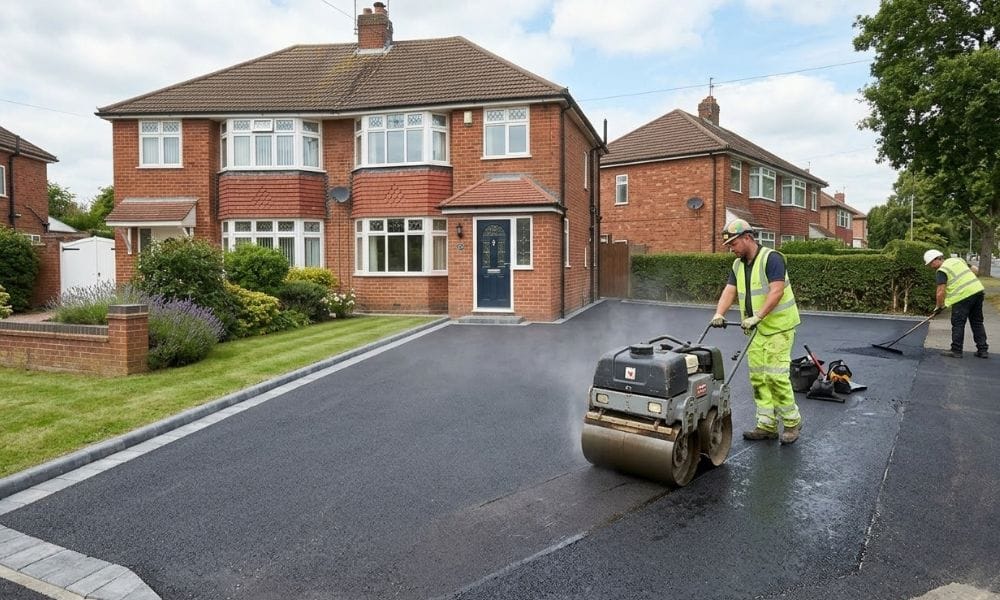
Beyond the base installation, a handful of additional items come up regularly on tarmac projects:
- Kerbing: New edging or replacing damaged kerbs adds around £15 to £30 per linear metre depending on the material used
- Dropped kerb: If you don’t already have a legal vehicle crossing from the road to your property, your local council will need to approve and install one. Costs vary by authority and typically run from a few hundred to over £1,000 for the council element alone
- Excavation and waste removal: If dig-out is needed, the spoil has to go somewhere. Budget around £150 to £300 for skip hire depending on volume, or check whether your contractor includes disposal in their quote
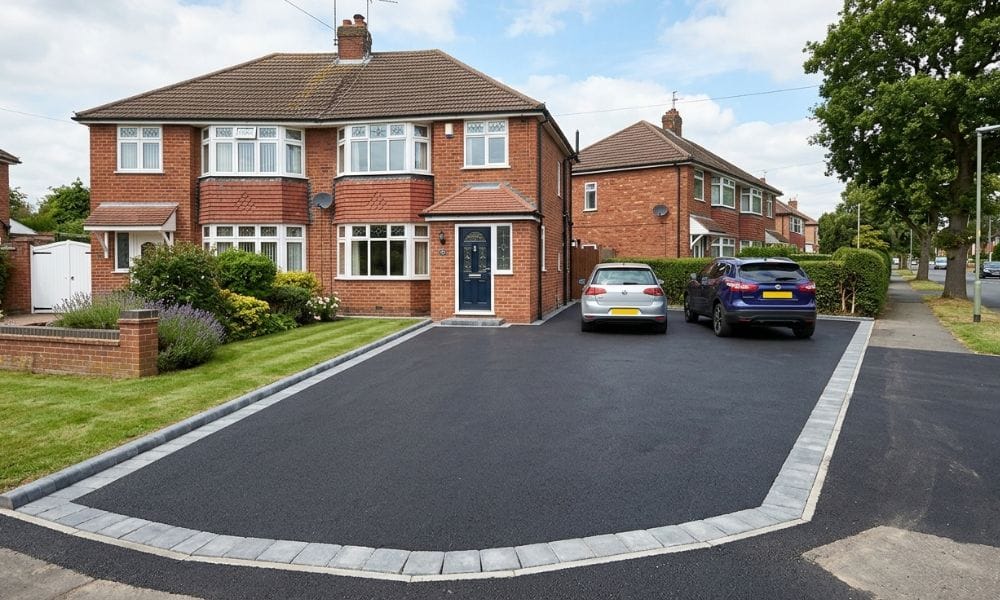
- Edging features: A brick or block border around a tarmac driveway adds a cleaner finish and improves kerb appeal. It adds cost, but many homeowners find it worth it
- Resealing: Tarmac should be resealed roughly every three to five years once it’s laid. This isn’t usually needed immediately after installation but factors into the long-term cost of ownership. Sealcoating typically runs around £3 to £6 per square metre as a maintenance job
Is Tarmac Worth It Compared to Other Surfaces?
For most homeowners looking for a clean, durable, practical driveway at a sensible price, tarmac is genuinely hard to beat. It goes down in a day or two on most residential jobs, it handles the UK’s freeze-thaw cycles reasonably well, and it needs less maintenance than block paving over the first several years of its life.
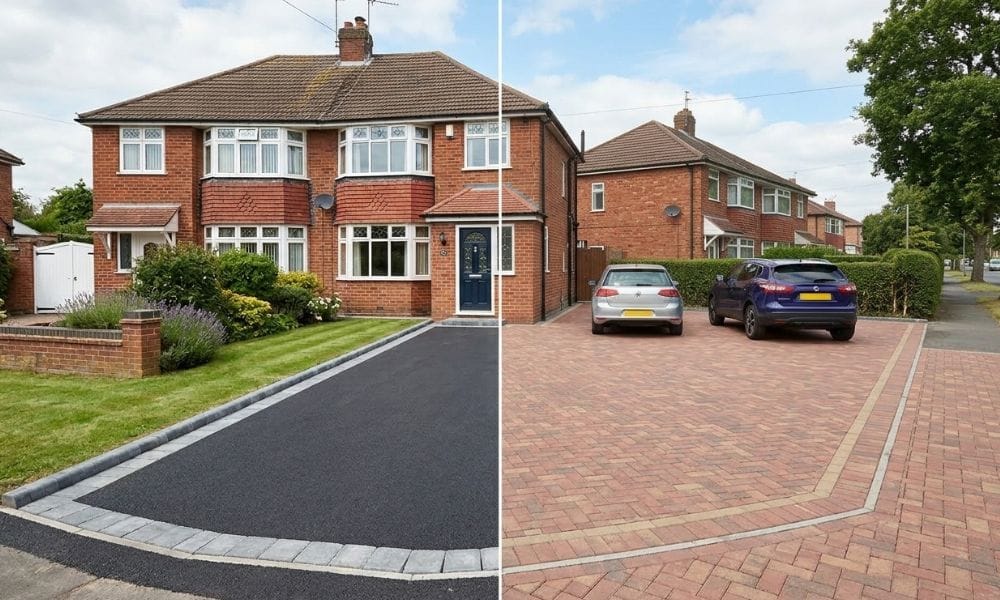
Block paving costs more upfront but gives you more design choice and the ability to replace individual blocks if they crack or stain. Concrete offers rigidity but is more expensive, slower to install and harder to repair cleanly. Gravel is the cheapest option but requires ongoing upkeep to stay tidy and can scatter onto the road.
Tarmac also has some honest trade-offs worth knowing about before you commit. It can soften in very high summer heat, it’s limited in colour options compared to block paving, and a poorly prepared base will cause problems within a few years regardless of how good the surface layer is. Our guide to the disadvantages of tarmac driveways covers the less-talked-about side of the material, which is worth reading alongside the positives.
What to Watch Out For When Getting Quotes
Tarmac is one of those trades that attracts rogue operators. Unsolicited knocks at the door from people claiming to have leftover material nearby are almost always a warning sign. Legitimate companies book jobs in advance and don’t cold call with discount offers.
When comparing quotes, a few things to check:
- Ask for an itemised breakdown. If a contractor won’t separate out materials, groundwork and labour, ask why
- Check whether VAT is included. Some quotes are listed excluding VAT, which adds 20% to the total
- Confirm whether sub-base and groundwork are included or quoted separately
- Ask if the price is fixed or subject to material cost adjustments
- Check reviews. A company with hundreds of verified Google reviews and a local reputation has more to lose by doing a poor job than one with no visible track record
Ted Maughan and the team at Driveway Guys have over 400 five-star Google reviews across Stoke-on-Trent, Staffordshire and Crewe. A track record like that tends to matter more than the lowest number on a quote sheet.
Frequently Asked Questions
How much does a tarmac driveway cost per square metre in the UK?
For a full installation in 2026, most UK homeowners pay between £60 and £110 per square metre. This covers materials, labour and standard sub-base preparation. Smaller driveways cost more per square metre than larger ones because fixed costs such as delivery and setup are spread across less area. All prices are a guide and will vary based on your location, the condition of the existing ground and raw material costs at the time of your project.
How much does a double driveway cost in tarmac?
A double driveway of around 40 square metres typically costs between £2,400 and £4,400 for a full installation. If the existing base is sound and the job is resurfacing only, this can come down to around £1,600 to £2,200. Get an itemised quote from a local contractor who has visited the site before committing to any figure.
Does a tarmac driveway add value to your home?
A well-laid tarmac driveway improves kerb appeal and tends to make a property more appealing to buyers, particularly where it replaces a cracked, weedy or overgrown surface. It won’t necessarily add a precise pound value on a formal valuation, but a clean, properly drained driveway removes a common buyer concern and can make a difference when buyers are comparing similar properties.
How long does a tarmac driveway last?
A properly installed tarmac driveway typically lasts 15 to 20 years. With regular maintenance, including crack repairs and resealing every three to five years, some driveways reach 25 years or more. The quality of the sub-base is usually the deciding factor. A well-prepared base extends the life of the surface above it significantly, which is why cutting corners on groundwork tends to cause problems.
Do I need planning permission for a tarmac driveway?
In most cases, no. Standard tarmac driveways do not require planning permission as long as surface water drains onto your own land rather than directly onto the public highway. There are exceptions, including properties in conservation areas and listed buildings. Our full guide on planning permission for tarmac driveways covers this in detail.
Getting a Quote in Stoke-on-Trent, Staffordshire or Crewe
No honest contractor can give you a firm price without seeing the site. Too many variables are involved: ground condition, access, what’s there now, what drainage is needed, and how straightforward the shape is. The figures in this guide give you a reliable starting point for budgeting, but they’re not a substitute for a proper site assessment.
If you’re based in Stoke-on-Trent, Staffordshire, Stafford or Crewe, the team at Maughan Construction can visit, assess and quote with no obligation and no deposit required upfront. Call 07500 042119 or use the contact form to arrange a free site visit.