Red is by some distance the most popular colour choice when homeowners decide to move away from standard black tarmac. It works well against brick, it reads as traditional without looking old-fashioned, and it holds its colour better than most of the alternatives in the coloured tarmac range. That said, it is not right for every property, and there are a few things worth knowing before you commit. If you are already thinking about a new installation, our tarmac driveways page covers the full process and what to expect from a quote.
What Is Red Tarmac and How Is It Made?
Standard tarmac gets its black colour from bitumen, the binding agent that holds the crushed stone aggregate together. Red tarmac works differently. The colour comes from the aggregate itself rather than the binder. A coloured stone, typically red granite or a pigmented crushed rock, is rolled into the top surface layer during installation. The result is a surface that has the same structural build as regular tarmac but with a distinct red tone across the wearing course.
This matters because it means the colour is in the material, not a coating on top. It will not peel, crack or wash off. What does happen over time is a gradual fading as the surface weathers and the stone oxidises slightly with UV exposure. Reds and terracottas tend to hold their tone better than greens or blues, but all coloured tarmac loses some depth over the years. Regular sealing, typically every three to five years, slows that process considerably.
The product most commonly used for residential installations in the UK is a macadam surface course with coloured aggregate. Tarmac’s Ulticolour range is the specification most installers work with, and classic red is one of the core colours in that system.
Does Red Tarmac Suit Your Property?
This is the question most people skip over in their enthusiasm for the colour, and it is worth spending a moment on.
Red tarmac works best with red or buff brick. Across Stoke-on-Trent, Stafford and the wider Staffordshire area, the housing stock is heavily weighted towards red and russet brick, which is exactly the right backdrop for a red driveway. The colours sit naturally together, and the overall effect reads as considered rather than contrived.
It is less successful against grey render, pale stone or painted facades. Against a rendered house in light grey or white, red tarmac can look jarring. The contrast is too sharp and neither element flatters the other. For those properties, mid grey or buff tarmac tends to give a better result.
The size of the driveway matters too. On a large, open frontage, red tarmac makes a strong statement and generally carries it well. On a small, narrow drive where the colour fills the entire view from the street, it can feel more intense than you expected from a sample card. If in doubt, looking at installed examples in your area before deciding is a sensible step.
Period properties in particular suit red tarmac well. Victorian and Edwardian houses with their original red brick benefit from a surface that echoes the building materials rather than contrasting with them. Post-war semis in and around Stoke respond well for the same reason. On newer builds with a more contemporary finish, the answer depends very much on the specific property.
How Much Does Red Tarmac Cost?
Red tarmac costs more than standard black. That is a consistent fact across the industry and worth factoring in from the start.
Most UK installers price standard black tarmac at around £80 to £100 per square metre for a full installation, covering excavation, sub-base, binder course and wearing course. Red tarmac adds roughly 15 to 25 per cent on top of that, putting a typical residential installation in the region of £95 to £125 per square metre depending on the contractor, the colour specification and the size of the job.
For a typical double driveway of around 40 square metres, the difference between black and red works out at somewhere between £600 and £1,000 in total. Whether that is worthwhile depends entirely on how much you value the appearance. For most homeowners who go for colour, the premium feels reasonable once the job is done. The driveway is often the first thing you see when you come home, and a surface you like the look of is worth paying for.
Our full guide to coloured tarmac driveways covers the pricing for the complete colour range alongside everything else you need to know about how coloured tarmac performs over time.
Red Tarmac vs Terracotta: What Is the Difference?
The two terms get used interchangeably but they are not quite the same thing.
Classic red tarmac is a brighter, more saturated tone. It reads clearly as red from a distance and works well on properties where you want a definite colour statement. Terracotta is deeper and more muted, with brown undertones that give it an earthier, more natural quality.
For older properties, particularly Victorian terraces and Edwardian semis with weathered or darker brickwork, terracotta often sits more comfortably than classic red. It does not compete with the building in the same way. On newer properties with cleaner lines and brighter brick, classic red tends to be the stronger choice.
Both are available through the main coloured macadam systems used by professional installers, and the price difference between them is minimal. The decision is largely aesthetic.
Edging Options for Red Tarmac Driveways
The border around a red tarmac driveway makes a significant difference to the finished look. The surface itself is one element, but the edging defines it and pulls the whole thing together.
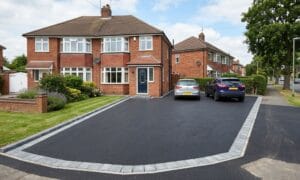
Charcoal block paving is the most commonly used border with red tarmac. The contrast is clean and the darker tone grounds the red rather than competing with it. Buff or natural sandstone block paving also works well, particularly on older properties where a softer tone is more appropriate than a sharp charcoal contrast.
A simple concrete kerbstone is the functional option and costs less, but it does not add anything visually. For a driveway where appearance matters enough to pay the coloured tarmac premium, spending a bit more on a decorative border edge is usually worth considering.
Planning Permission for Red Tarmac
The colour of your tarmac does not change the planning rules that apply to the installation. Red, black or any other shade, the same rules apply across the board.
For most residential driveways, permitted development rights mean no planning permission is required. The main condition to be aware of is drainage. If the surface is impermeable and water would run off onto the public highway rather than draining into the ground or a soakaway, you may need permission regardless of the size. Permeable tarmac systems can address this if it is a concern for your plot.
Conservation areas are the one exception where colour can theoretically come into play. Some local planning authorities have guidance about surface materials in designated areas, and in rare cases colour may be a consideration. If your property is in a conservation area in Stoke-on-Trent, Stafford or Crewe, it is worth a quick check with the council before ordering materials.
Does red tarmac fade over time?
Yes, all coloured tarmac fades to some degree as it ages and weathers. Red tends to hold its tone better than greens or blues, but some fading over five to ten years is normal. Having the surface sealed every three to five years with a quality tarmac sealant significantly slows the process and can restore a lot of the original depth to a surface that has started to look pale.
Is red tarmac as strong as standard black tarmac?
Yes. The structural layers of a red tarmac driveway are identical to standard black. The sub-base, binder course and surface course are all the same specification. The colour is only in the aggregate used for the top wearing course and has no effect on how strong or durable the driveway is. A properly installed red tarmac driveway on a well-prepared sub-base will last 20 to 25 years, the same as any other tarmac installation.
Can you get red tarmac in different shades?
Yes. Classic red is the most widely available and popular option, but terracotta is also commonly available and gives a deeper, more muted tone with brown undertones. Some suppliers offer orange as a distinct option, which sits between classic red and terracotta. The availability of specific shades depends on the installer and the product system they use, so it is worth confirming the exact colour options at the quote stage.
How much extra does red tarmac cost compared to black?
Typically around 15 to 25 per cent more than standard black tarmac. For most residential driveways this works out at an additional £600 to £1,000 depending on the size of the job. The premium covers the cost of the coloured aggregate material and the additional care required during laying to achieve a consistent finish. Coloured surfaces show uneven rolling more readily than black, so the process is slower and more involved.
Will red tarmac suit my house if it has a grey render or modern finish?
In most cases, no. Red tarmac sits best against warm-toned brick, particularly red or buff brick, which is common across Stoke-on-Trent and Staffordshire. Against grey render or pale stone, the contrast tends to look harsh and neither element complements the other. For rendered or contemporary properties, mid grey or buff tarmac generally gives a much better result. If you are unsure, looking at examples in person before deciding is the most reliable way to check.