Tarmac has a bit of an image problem. Ask most people to picture one and they’ll think of the standard black surface outside a 1970s council house. The reality in 2026 is quite different. Tarmac comes in a range of colours, can be finished in several ways, and when it’s laid well with good edging and a clean border, it looks smart enough to add genuine kerb appeal to almost any property type.
If you’re considering a new tarmac driveway and want to know what your options actually are, this guide covers the main choices: colours, finishes, edging styles, and how to get the best result from the surface. For more on what a tarmac driveway costs and what the installation involves, the service page has the full detail.
Why Tarmac Still Makes Sense in 2026
Before the inspiration part, it’s worth being clear on why people still choose tarmac when block paving and tegula exist.
Speed is part of it. A tarmac driveway can be laid and usable within a day or two. For homeowners in Stoke-on-Trent, Newcastle-under-Lyme or Stafford who don’t want a week of disruption, that matters.
Cost is the bigger factor. Tarmac at £100 per square metre is around 30 per cent less than block paving for an equivalent area. On a large driveway, that difference is significant.
And for certain property types, particularly detached and semi-detached houses built between the 1960s and 1990s, a well-finished tarmac driveway simply suits the property better than block paving would. The proportions work. The clean, uninterrupted surface lets the house do the talking.
Tarmac Colours: What’s Available
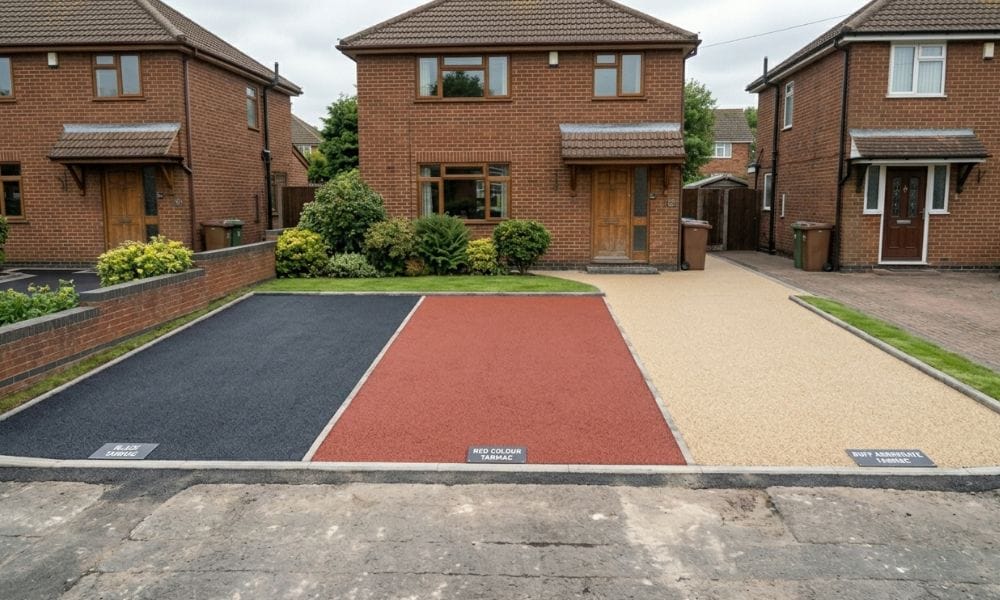
Standard tarmac is black. That’s the base material, and for most driveways it’s still the most popular choice — mainly because it’s the most cost-effective and looks clean and functional when freshly laid.
Beyond black, coloured tarmac is made by adding pigment or using coloured aggregate in the surface course. The finish is mixed into the tarmac itself, so the colour is through the material rather than painted on top.
Red Tarmac
Red is the most commonly requested colour after black. It’s available in several shades from terracotta through to a deeper brick red, and it works particularly well alongside traditional red brick properties. A lot of homeowners in Longton, Burslem and around the older housing stock in the ST postcodes choose red tarmac because it picks up the brick tones and ties the front of the property together.
It costs more than standard black, typically adding 15 to 25 per cent to the overall price.
Green Tarmac
Less common, but worth knowing about. Green tarmac tends to suit rural settings and properties surrounded by established gardens. It reads as less urban than black or red and can work well on wider driveways with lawn borders on either side.
Buff and Cream Tarmac
These lighter tones have grown in popularity alongside the trend for lighter exterior finishes on new builds. Buff tarmac sits comfortably next to cream render, sandstone cladding, or pale brick. The downside is that lighter surfaces show oil stains and tyre marks more obviously than darker ones.
Resin-Bonded and Resin-Bound Surfaces
These are often grouped with coloured tarmac but are technically a different product. A resin-bonded surface scatters aggregate onto a resin base, giving a textured, decorative finish with a wide colour palette. Resin-bound uses the same aggregate but mixes it into the resin, creating a smooth, permeable surface.
Both are more expensive than standard tarmac but considerably cheaper than block paving. They work well as a middle ground where you want more visual interest than plain tarmac but don’t want the cost or complexity of block paving.
For more on colour options, the guide on what colours tarmac driveways come in covers the full range in detail.
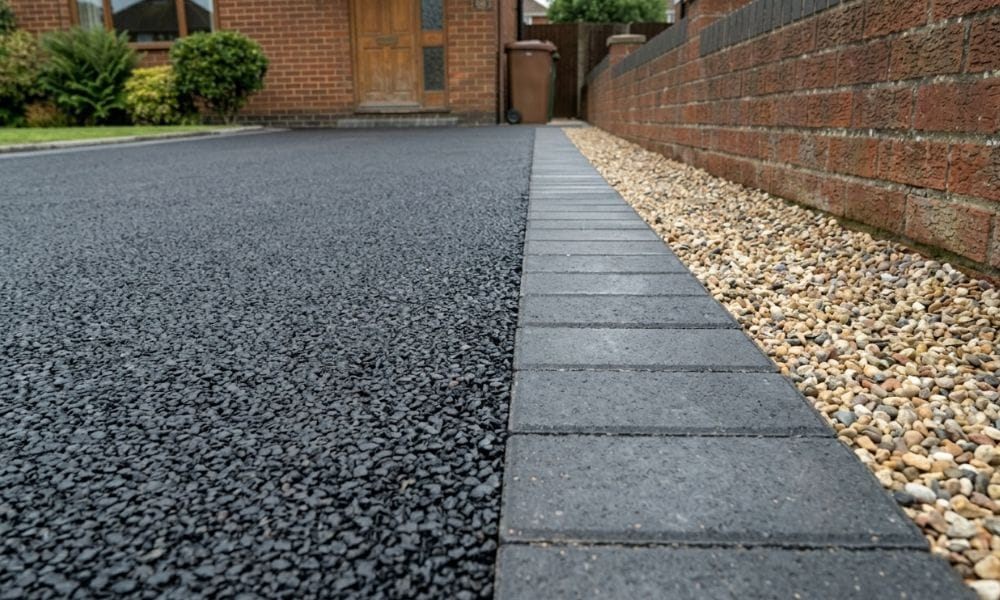
Tarmac Finishes and Textures
Colour is one variable. The finish of the surface is another, and it affects both how the driveway looks and how it performs underfoot.
Standard Smooth Tarmac
The default finish for most driveways. A rolled, compacted surface with the texture of the aggregate showing through slightly. Clean, practical, and straightforward. It performs well in terms of grip and drainage when laid with the correct falls.
Fine-Grade Tarmac
A surface course using smaller aggregate, which gives a finer, smoother appearance. Popular for driveways where appearance is a priority, particularly on properties with more formal front elevations. It costs slightly more than standard but the finish is noticeably cleaner.
Macadam Surfaces
Macadam (often called tarmacadam, which is where “tarmac” comes from) refers to the traditional layered construction of a driveway: a base course of larger aggregate, topped with a fine surface course. A proper macadam driveway has distinct layers and is what a reputable contractor like Maughan Construction will install. The surface layer sits on a stable, compacted base, which is why these driveways last 20 to 25 years when installed correctly.
The short-cut version is a single-layer application, which is quicker but doesn’t perform as well over time. It’s worth asking any contractor how many layers they’re laying.
Edging: The Detail That Makes the Difference
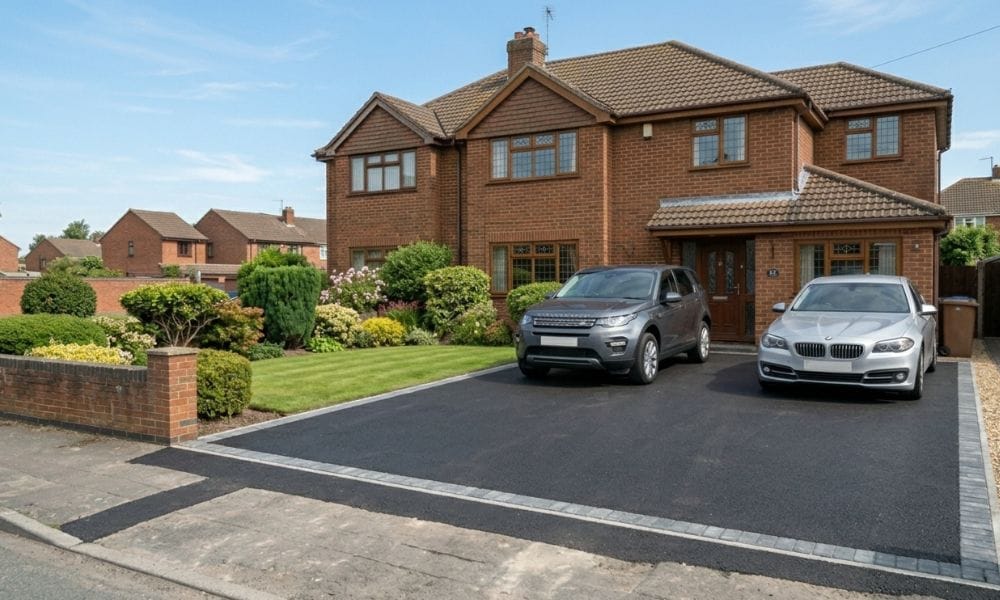
The edging on a tarmac driveway does more than look good. It structurally contains the tarmac and stops the edges from cracking and breaking away. Without edging, tarmac edges crumble within a few years because there’s nothing to hold the material in place.
On a design level, edging also gives you an opportunity to add a contrasting finish that lifts the overall appearance considerably.
Block Paving Edging
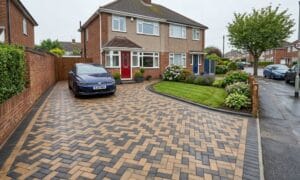
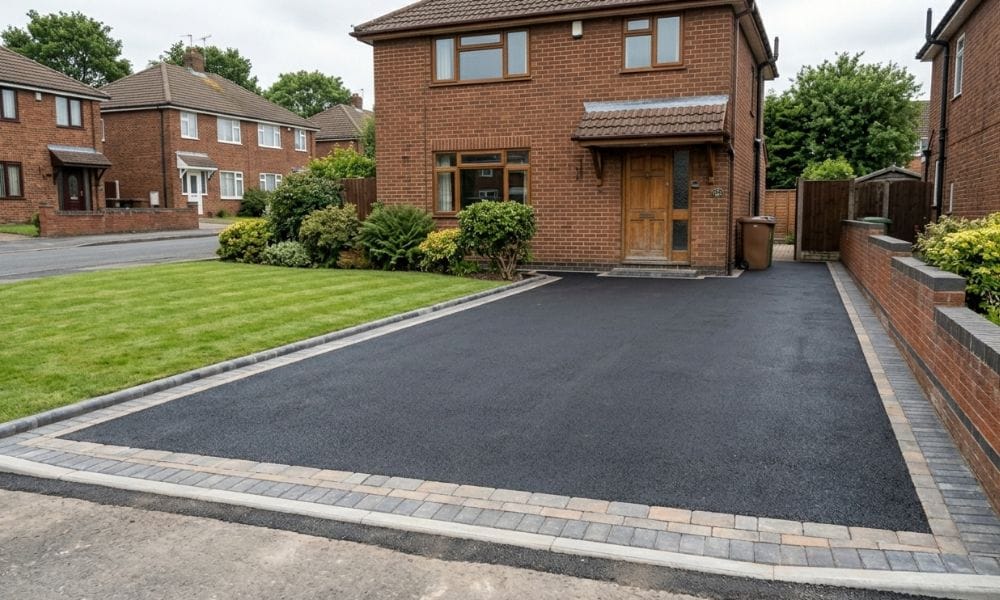
The most popular choice. A single row of block pavers along the perimeter of a tarmac driveway creates a clean, defined border that gives the whole area a more considered, finished look. Charcoal blocks against black tarmac, or buff blocks against red tarmac, are both popular combinations across Staffordshire.
Granite Sett Edging
Granite setts (small, roughly cube-shaped stone blocks) make a more traditional, slightly rustic edging option. They work well on older or period properties where a harder, more formal edge suits the character of the house.
Concrete Kerb Edging
Less visible than block or sett edging, but functional and cost-effective. Often used when the budget is tighter or where the edging will be largely hidden by planting.
Design Ideas by Property Type
Not every approach works for every house. Here’s a rough guide to what tends to look best where.
Terraced houses in Stoke-on-Trent: Space is often limited and proportions are tighter. Standard black or red tarmac with block paving edging keeps things clean. Avoid overly decorative finishes on small areas – they can look cluttered rather than smart.
Semi-detached houses in Newcastle-under-Lyme and Stafford: More flexibility. A double-width driveway in coloured tarmac with block paving edging and a dropped kerb gives a tidy, well-proportioned finish. Red or buff depending on the brick colour.
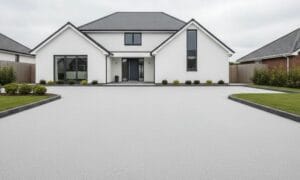
Detached houses: The most scope for something more considered. Resin-bound or fine-grade coloured tarmac with granite sett edging and a block paving border around a turning area can look genuinely impressive without the cost of a full block paving driveway.
New builds: These often have lighter brick and render finishes. Buff or cream tarmac sits better than black against pale elevations.
Kerb Appeal: Small Details That Help
A few things make a significant difference to how a tarmac driveway looks, regardless of colour or finish.
Dropped kerb quality. A well-executed dropped kerb at the road edge makes the whole driveway look professional. A badly cut or uneven kerb is noticeable and undermines everything else.
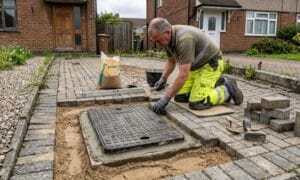
Gully and drain covers. Visible steel gully covers in the middle of a driveway look untidy. Block-infill drain covers that blend with the surrounding surface are a relatively small extra cost and make a real difference.
Clear lines between the driveway and lawn or borders. A crisp edge where the tarmac meets the garden makes the whole front of the property look maintained and intentional.
Lighting. Low-level bollard or recessed driveway lights are increasingly popular across the higher-value streets in areas like Trentham and Stone. They’re worth planning for before the driveway is laid rather than retro-fitting afterwards.
For coloured tarmac inspiration specifically, see the guides on coloured tarmac driveway ideas and red tarmac driveways for more detail on specific colour choices.
Maughan Construction are also experts in block paving installation and have installed driveways across Crewe and created beautiful driveways for customers in Stafford. We know exactly what we are doing and have decades of experience so you know you are going to be in safe hands with us.
Tarmac Driveway Price Calculator
Get a rough idea of what your tarmac driveway could cost. Simply answer the questions below and we'll give you an instant estimate based on your driveway size and requirements. Please note this is a guide price only, and your final quote may vary depending on your specific site and circumstances.
Is your driveway an irregular shape? (For example, circular.)
Do you want to use coloured tarmac or have any unusual designs?
Do you want to have any edging?
Will you need an old driveway removing or excavation work carried out first?
What colours can tarmac driveways come in?
Tarmac is available in standard black, red, green, buff, and cream, as well as various shades within those ranges. Coloured tarmac uses pigment or coloured aggregate mixed into the surface course rather than paint or coating, so the colour is through the material. Red is the most popular colour choice after standard black.
How much does a coloured tarmac driveway cost compared to standard black?
Coloured tarmac typically adds 15 to 25 per cent to the cost of a standard black tarmac driveway. At Maughan Construction’s pricing of £100 per square metre for standard tarmac, a coloured finish would typically bring the price to around £115 to £125 per square metre depending on the colour and size of the job.
What is the best edging for a tarmac driveway?
Block paving edging is the most popular choice because it looks good and also structurally contains the tarmac to prevent edge cracking. Granite setts are a good option for older or period properties. Concrete kerb edging works well where the edge will be hidden by planting. All three outperform having no edging, which allows tarmac edges to break down relatively quickly.
What is the difference between tarmac and resin-bound driveways?
Tarmac is a bound mixture of aggregate and bitumen, laid as a continuous surface. Resin-bound uses loose aggregate mixed with a clear resin, creating a decorative, permeable surface with a wider colour palette and a more textured appearance. Resin-bound costs more than tarmac but less than block paving, and it’s a popular middle-ground option for homeowners who want more visual interest than plain tarmac.
How long does a tarmac driveway last in Staffordshire?
A properly installed tarmac driveway, laid with a compacted base course and quality surface course, typically lasts 20 to 25 years. Single-layer installations or driveways laid without proper edging will deteriorate faster. Stoke-on-Trent’s clay-heavy ground means proper sub-base preparation matters here. See our full guide on how long tarmac driveways last for more detail.
Can Maughan Construction install coloured tarmac in Stoke-on-Trent?
Yes. Maughan Construction install standard and coloured tarmac driveways across Stoke-on-Trent, Newcastle-under-Lyme, Stafford, Congleton, Crewe and the wider Staffordshire area. Call 07500 042119 or 01782 607715 for a free quote.