Most people know tarmac comes in black. Fewer know it comes in fifteen or more colours, with some options that look nothing like the surface you’d expect to find on a road. If you’re researching a new driveway and wondering what’s actually available in the UK, this is the complete reference guide. Every colour in the main residential range is covered here, along with how each one performs, which properties it suits, and what to expect as it ages. For everything else on tarmac installation, our tarmac driveways page covers the full process and what’s included in a quote.
How Tarmac Gets Its Colour
Before going through the range it helps to understand where the colour actually comes from, because it affects how you think about fading and longevity.
Standard black tarmac gets its colour from bitumen, the binding agent that holds the crushed stone together. Coloured tarmac works differently. The colour comes from the aggregate, the stone that makes up the bulk of the surface layer. Coloured or pigmented stone is used in the wearing course, the top layer you see and drive on, while the structural layers beneath remain standard specification.
This means the colour is in the material itself, not applied on top. It will not peel or wash off. What does happen is gradual fading as the aggregate oxidises with UV exposure and weathering over the years. How quickly this happens depends on the colour, the quality of installation, and whether the surface is sealed regularly.
The product most widely used for residential coloured tarmac in the UK is the Tarmac Ulticolour macadam system. This is what the majority of professional installers work with and the colour names below correspond to that range, though equivalent options exist from other suppliers.
The Full Colour Range
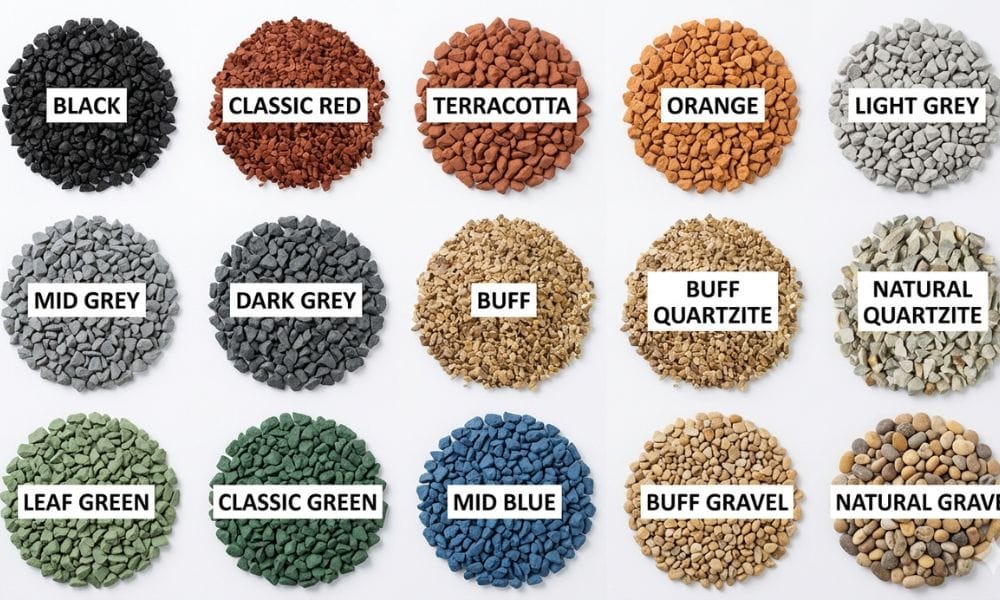
Black
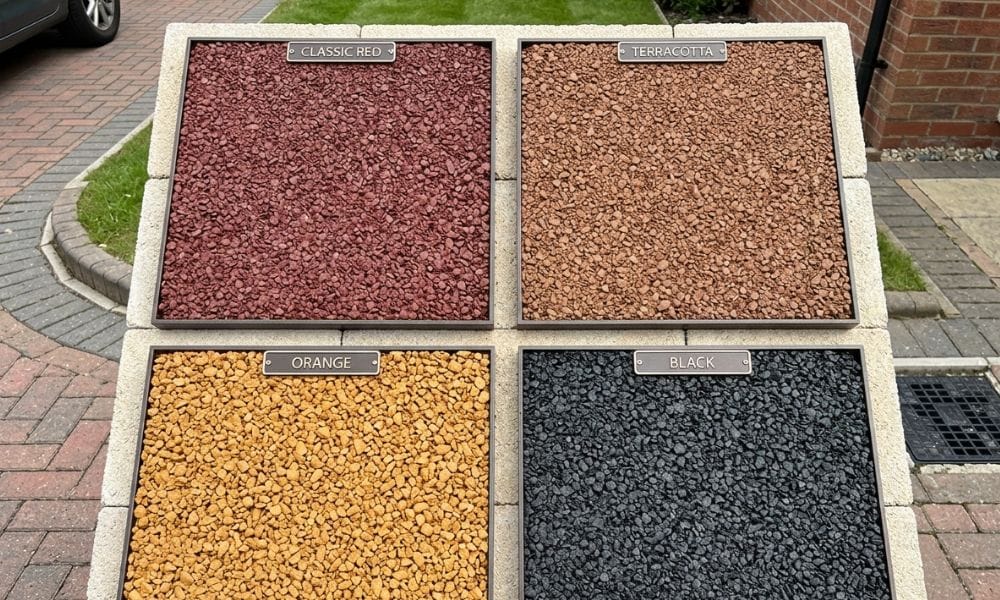
The standard. Every tarmac driveway starts here unless you specify otherwise. Black gets its depth from the bitumen binder showing through the dark aggregate and fades to a softer charcoal grey over time as the bitumen oxidises. No premium over the base installation price.
Classic Red
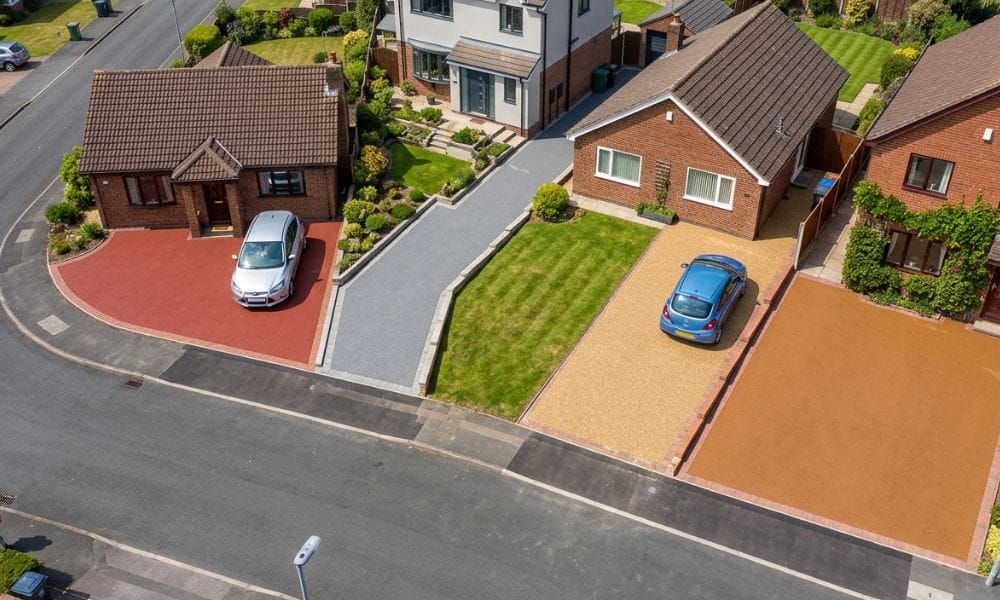
The most popular coloured tarmac choice in the UK by a wide margin. Red aggregate stone gives a warm, consistent finish that reads clearly as red from a distance and suits a wide range of UK housing types. It works particularly well against red and buff brick, which is the dominant building material across Stoke-on-Trent, Staffordshire and much of the Midlands.
Red holds its colour better than most other options in the range. Some fading is normal over five to ten years but the tone stays recognisably red rather than washing out entirely. Sealing every three to five years maintains the depth considerably.
Terracotta
Terracotta sits between classic red and natural brown. It has more earth tones and less saturation than classic red, which makes it the better choice for properties with darker or more weathered brickwork. Victorian and Edwardian houses with aged red brick often look better in terracotta than in the brighter classic red.
The distinction between classic red and terracotta is subtle enough that it is worth looking at physical samples in natural daylight before deciding. On a card indoors they can look almost identical. On a full driveway outside they read quite differently.
Orange
A genuine option but a less common one. Orange tarmac has warmth and visibility and works best on properties with pale or cream-rendered exteriors where you want the driveway to make a statement. On red brick it can clash. On light stone or render it can look striking. Worth seeing in person before committing.
Light Grey
A clean, pale grey that works well on contemporary and rendered properties. Light grey reads as modern without being stark, and it pairs naturally with white or off-white render, pale brick and newer building materials. It is popular on new-build estates where the architecture has a more minimal character.
Light grey shows dirt and tyre marks more readily than darker options, which is worth considering on a busy driveway with frequent vehicle movements.
Mid Grey
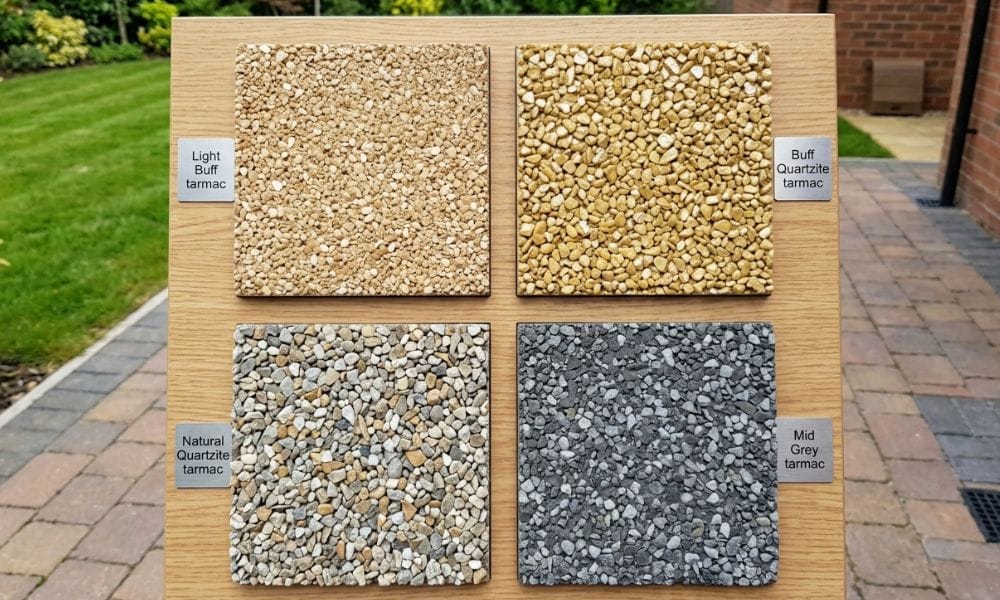
The fastest-growing colour in the residential tarmac range over the past five years. Mid grey hits the sweet spot between distinctive and safe: it reads clearly as a colour choice rather than default black, but it works across enough property types that it rarely looks wrong.
It photographs well, which matters for kerb appeal if you are thinking about a property sale. Mid grey is consistent enough to look good in estate agent photos without requiring specific lighting conditions the way lighter colours sometimes do.
Dark Grey
Dark grey sits very close to standard black in appearance but has a cooler, slightly more refined quality. For anyone who likes the clean practicality of black tarmac but wants to move a step away from the standard, dark grey is the most low-risk option in the coloured range. It hides dirt well, ages gracefully, and works on almost any property type.
Light Buff
A warm sandy tone that sits naturally next to sandstone, buff brick and light render. Light buff works particularly well on properties in rural and semi-rural Staffordshire where the surrounding landscape has earthy, muted tones that a bolder colour would compete with.
It is softer than classic red and considerably less striking, which for many homeowners is exactly the point. Not every driveway needs to draw attention.
Buff Quartzite
A slightly richer, more golden version of light buff, with visible quartzite aggregate that adds texture and depth to the surface. The quartzite stone catches the light differently at different times of day, giving the driveway a more natural and varied appearance than a single-tone surface.
Popular with stone-built properties and period homes where a surface that echoes natural materials is more appropriate than a single bold colour.
Natural Quartzite
Warmer and more amber than buff quartzite, with a distinctly earthy character. Natural quartzite works well with properties that have terracotta roof tiles, natural stone walls, or warm-toned exterior materials. It sits back from the property rather than competing with it, which suits traditional architecture well.
Buff Gravel
One of the more unusual options in the range. Buff gravel tarmac is designed to give the appearance of a traditional loose gravel driveway without the practical problems that come with loose stone. No migration, no weeding through the surface, no stones flicked up by tyres. The finished surface looks considerably more like a gravel drive than a standard tarmac one.
It suits properties where loose gravel would have been the natural material choice: rural homes, farmhouses, period properties with large frontages. The texture is distinct from other coloured tarmac options and worth seeing in person before specifying.
Natural Gravel
Similar to buff gravel in concept but with a slightly deeper, more mixed-stone appearance. Where buff gravel reads as uniform sandy gravel, natural gravel has more variation in tone, giving a slightly more textured and less formal look.
Leaf Green
A muted, natural green that blends into rural and landscaped settings more readily than it stands out from them. Leaf green is rarely chosen for urban driveways but comes up regularly for properties surrounded by mature gardens, woodland settings or countryside where a surface that echoes the landscape is preferable to one that contrasts with it.
Classic Green
A deeper, more saturated green than leaf green. Classic green is more commonly specified for commercial applications than residential driveways: car parks, pedestrian zones, sports facilities and areas where colour-coding serves a functional purpose. On a domestic driveway it is a bold choice and one that works better in some contexts than others.
Mid Blue
The most distinctive option in the range and the least commonly used for residential driveways. Mid blue works well commercially for colour-coding purposes but on a front driveway it is an unusual choice. It does come up occasionally, particularly on contemporary properties or where the homeowner has a specific design vision for the frontage.
How Colours Compare on Fade Resistance
Not all colours age the same way. Based on how different aggregates respond to weathering:
Best fade resistance: Red and terracotta hold their tone well. The warm stone aggregate oxidises slowly and the colour shift over ten to fifteen years is gradual rather than dramatic.
Moderate fade: Grey options fade slightly but in a way that is difficult to notice because the colour drift stays within the same tonal range. Mid grey that softens slightly just looks like light grey.
More noticeable fade: Greens and blues are the most vulnerable. Classic green and mid blue can lose significant saturation over five to ten years, particularly on driveways with high sun exposure. Sealing is more important for these colours than for the warm-tone options.
Buff and quartzite tones: These fade naturally into softer versions of themselves, which often looks appropriate given that they are trying to echo natural materials in the first place.
Which Colour Fits Your Area
For properties across Stoke-on-Trent and the wider Staffordshire area, the local housing stock skews heavily toward red and buff brick. Classic red, terracotta and buff quartzite all sit naturally against these buildings. Mid grey has grown considerably in popularity on the newer housing developments around Stafford and Crewe where the architecture is more contemporary.
For a more detailed look at how to match a colour to a specific property type, our coloured tarmac driveway ideas guide works through the decision property by property.
For a complete technical breakdown of how coloured tarmac is made, how it performs over time and what the full installation process involves, our full guide to coloured tarmac driveways covers all of that in detail.
Frequently Asked Questions
How many colours does tarmac come in?
The main UK residential tarmac colour range includes around fifteen options: black, classic red, terracotta, orange, light grey, mid grey, dark grey, light buff, buff quartzite, natural quartzite, buff gravel, natural gravel, leaf green, classic green and mid blue. Not all installers carry the full range as standard, so it is worth confirming availability when you request a quote. The most commonly stocked colours for residential work are classic red, mid grey, dark grey and buff quartzite.
What is the most popular tarmac colour for driveways?
Classic red is the most popular coloured tarmac choice for residential driveways across the UK. It works well with the red-brick housing stock common across the Midlands and the North, and it has enough familiarity that it rarely divides opinion. Mid grey has grown substantially in popularity over the past few years and is now the most commonly chosen colour for new-build and rendered properties. Black remains the single most used tarmac colour overall, but among homeowners specifically choosing a colour, red leads.
Does coloured tarmac cost more than standard black?
Yes, typically around 15 to 25 per cent more per square metre. The premium covers the cost of the coloured aggregate material and the additional care required during installation to achieve a consistent finish across the surface. Coloured tarmac shows uneven rolling more readily than black, so the laying process is slower. For most residential double driveways, the colour premium works out at an additional £600 to £1,000 over the black tarmac price.
Can you get tarmac in grey?
Yes. Grey tarmac is available in three main shades: light grey, mid grey and dark grey. All three are widely available from professional installers and are increasingly popular choices for contemporary and rendered properties. Mid grey is currently the fastest-growing colour in the residential tarmac range. Dark grey is the closest option to standard black and is a good choice for anyone who wants to move slightly away from the default without making a dramatic colour statement.
How long does coloured tarmac keep its colour?
All coloured tarmac fades to some degree as it weathers and is exposed to UV light. Reds and terracottas hold their tone best and can look good for fifteen years or more with occasional sealing. Greys fade slowly and the shift is rarely dramatic. Greens and blues are the most vulnerable and can lose significant depth over five to ten years without regular maintenance. Having the surface sealed every three to five years with a quality tarmac sealant considerably slows the fading process across all colours.