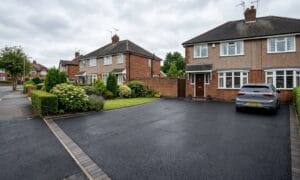
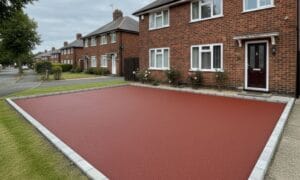
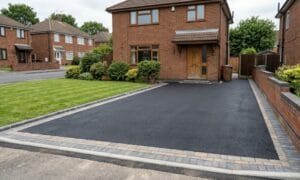
Black tarmac is the default. Always has been. But over the past decade, coloured tarmac has gone from a niche upgrade to something a significant number of homeowners across Stoke-on-Trent, Stafford, Crewe and Staffordshire are actively asking about. The colour range has expanded considerably, the quality has improved, and the price gap between standard black and coloured has narrowed. If you’re considering a new driveway and wondering whether colour is worth the conversation, this guide covers everything you need to know. Take a look at our tarmac driveways page for full details on what’s included in an installation.
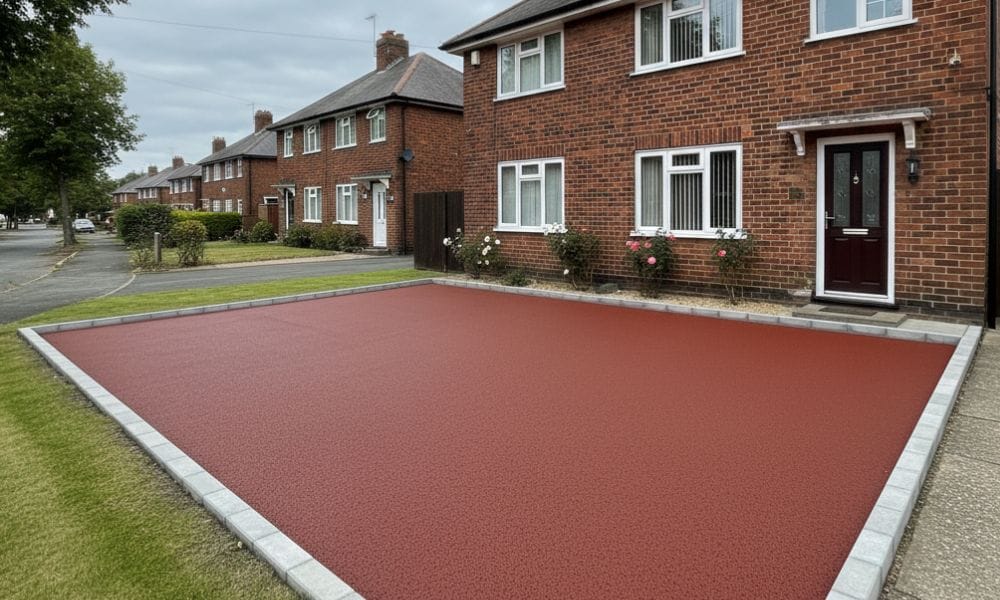
What Is Coloured Tarmac?
Standard tarmac gets its black colour from bitumen, the binder that holds the aggregate together. Coloured tarmac works differently. Rather than relying on the bitumen for colour, pigments are added to the mix or, more commonly, the surface layer uses coloured aggregate stone to produce the finished colour.
The result is a surface that has the same structure, strength and longevity as conventional tarmac but with a distinct appearance. Most coloured tarmac products use what’s called a macadam surface course with coloured chippings rolled into the top layer. The Tarmac Ulticolour system, which is one of the most widely specified products in the UK, uses this method and produces a consistent, durable finish.
One thing worth knowing: coloured tarmac is not paint. It is not a coating applied on top of black tarmac. The colour is in the material itself, which means it doesn’t peel, crack off or need repainting. That’s a common misconception worth clearing up early.
The Full Colour Range
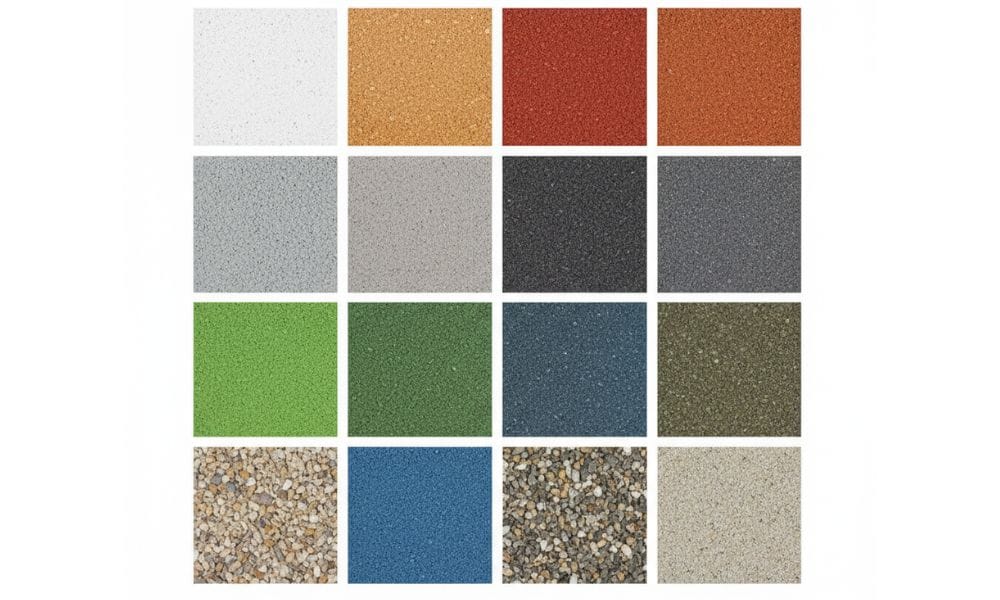
The days of choosing between red and “slightly different red” are long gone. The current range covers a wide spectrum, from warm neutrals through to bolder statement colours. Here is a full breakdown of the colours available:
Neutrals and Stone Tones
- White: A clean, pale finish that works particularly well with modern or contemporary properties. Tends to show dirt more than darker options so worth bearing in mind for busy driveways.
- Light Buff: A warm sandy tone that sits naturally alongside brick and stone. Popular across Staffordshire where sandstone buildings are common.
- Buff Quartzite: A slightly richer, golden buff with visible quartzite aggregate. Gives a textured, natural look without straying into bold territory.
- Natural Quartzite: Warmer and more amber than buff quartzite, with a distinctly earthy character. Works well with properties featuring brick or terracotta roof tiles.
- Buff Gravel: Has the appearance of traditional gravel with the practicality of bound tarmac. No loose stones, no weeds, but the look of a classic gravel driveway.
- Natural Gravel: Similar to buff gravel but with a slightly deeper, more mixed-stone appearance.
Reds and Warm Tones
- Classic Red: The most popular coloured tarmac option by some margin. Works on both residential and commercial properties and has a familiarity that means it rarely divides opinion.
- Terracotta: A deeper, more muted red with brown undertones. Less bold than classic red and blends well with older properties, particularly Victorian and Edwardian houses.
- Orange: A striking choice. It’s not for everyone but on the right property it looks genuinely good. Works best with light-coloured render or pale brickwork.
Greys
- Light Grey: Clean and contemporary. Pairs well with rendered or painted properties and gives a modern feel without the starkness of white.
- Mid Grey: The most versatile grey option. Works across a wide range of property styles and is popular with homeowners who want a step up from black without committing to a warmer colour.
- Dark Grey: Close to standard tarmac in appearance but with a slightly cooler, more refined look. A good entry point for anyone who likes the idea of coloured tarmac but is hesitant about going too far from the classic finish.
Greens
- Leaf Green: A muted, natural green that blends well in rural settings or properties with a lot of surrounding greenery. Seen more in village and countryside locations than urban areas.
- Classic Green: A bolder, more saturated green. Less commonly used on domestic driveways but popular for commercial car parks, play areas and pedestrian zones.
Blue
- Mid Blue: One of the more distinctive options in the range. Rarely used for front driveways but crops up in commercial applications, sports facilities and car parks where colour-coding matters.
Is Coloured Tarmac More Expensive Than Black?
Yes, and it’s worth being upfront about that rather than burying it at the end.
Standard black tarmac from an established contractor typically costs between £80 and £100 per square metre across the Midlands, covering materials, labour and a properly prepared sub-base. Prices at the lower end of that range usually reflect lighter groundwork preparation or smaller operations. At Maughan Construction, standard black tarmac is priced at £100 per square metre. That includes excavation, a compacted Type 1 sub-base, binder course, wearing course and waste removal. Nothing is left out.
Coloured tarmac adds a premium of around 15 to 25% on top of that, depending on the colour chosen and the size of the job. For most residential installations across Stoke-on-Trent, Staffordshire and Crewe, that puts coloured tarmac in the region of £115 to £125 per square metre.
The premium is there for two reasons. The coloured aggregate material costs more than standard tarmac, and the laying process requires more care. Coloured surfaces show uneven rolling or join lines far more readily than black does, so the work is slower and more considered.
For a typical double driveway of around 40 square metres, the difference between standard black and a coloured finish works out at roughly £600 to £1,000 in total. Whether that’s worth it comes down to what the driveway means to the property. On a house where the drive is visible from the street and kerb appeal matters, most homeowners who go for colour are glad they did. For a full picture of how tarmac pricing compares to other surfaces, our block pave vs tarmac cost guide has a detailed breakdown.
Does Coloured Tarmac Last as Long as Black?
A properly installed coloured tarmac driveway lasts as long as a standard black one. The structure is identical: a compacted sub-base, a binder course, and a surface course on top. The colour is in the surface course only. It does not affect the structural integrity of the driveway.
What does change over time is the intensity of the colour. All coloured tarmac fades to some degree as it weathers. How much depends on the colour, the sun exposure and the quality of the original installation. Reds and terracottas tend to hold their colour well. Greens and blues can fade more noticeably over five to ten years.
Sealing a coloured tarmac driveway every three to five years helps maintain the colour and protects the surface. This is worth factoring into the long-term cost. A quality sealant applied by a professional can restore a lot of the original depth to a faded surface.
For more on what affects tarmac driveway longevity, our article on the disadvantages of tarmac driveways covers maintenance expectations honestly.
Which Colour Works Best for Your Property?
There is no single right answer, but there are patterns worth knowing about.
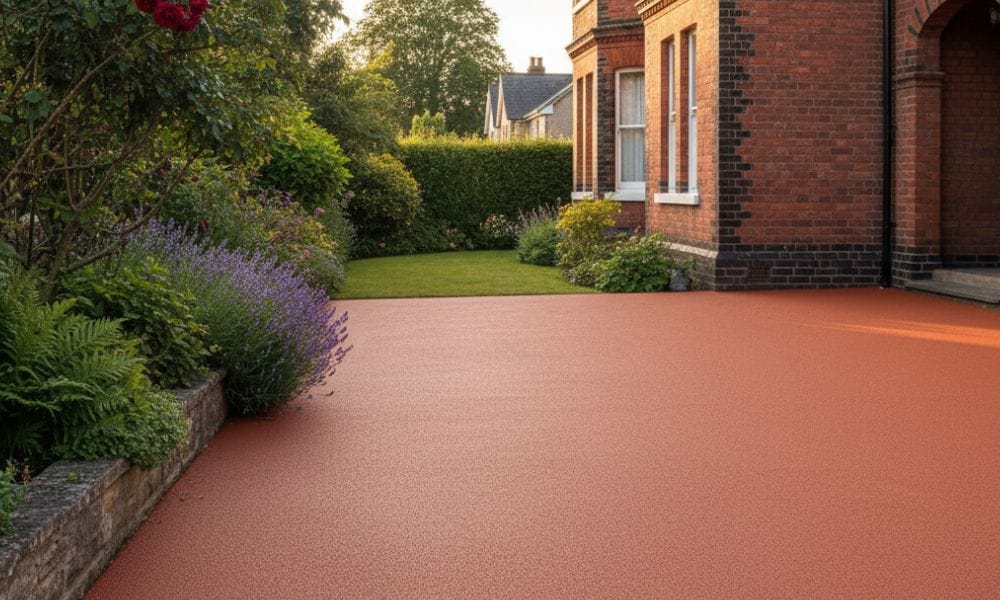
Red and terracotta are by far the most popular choices for residential driveways across Stoke-on-Trent and Staffordshire. The region has a lot of red-brick housing stock, and warm-toned tarmac complements that naturally. Classic red works particularly well with post-war semis and detached houses with red or buff brick.
Buff and quartzite tones suit older properties, particularly stone-built cottages and farmhouses around the Staffordshire Moorlands and the Cheshire Plain. They sit quietly in the landscape rather than drawing attention to themselves, which is often exactly what you want in a rural or semi-rural setting.
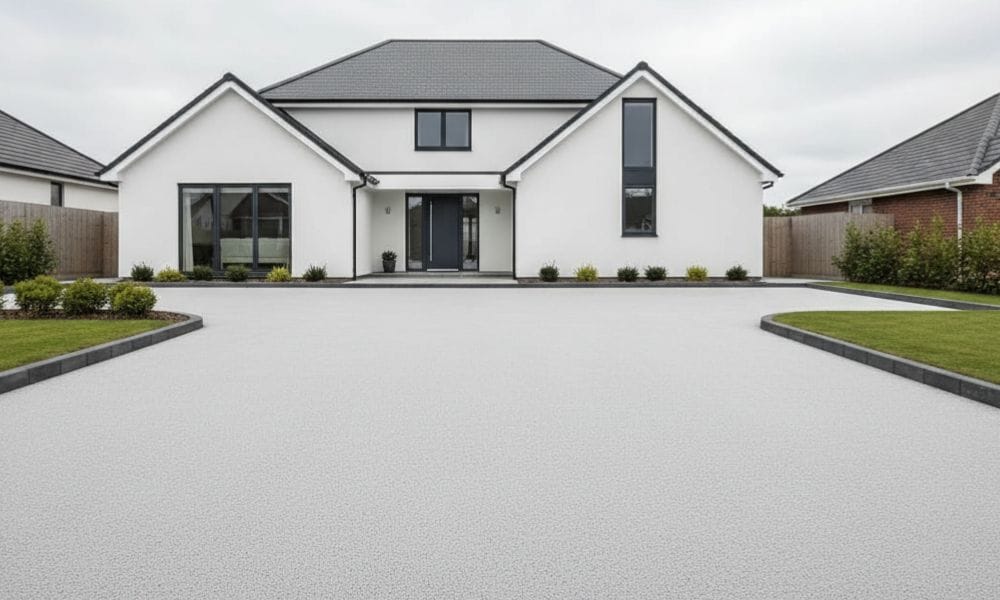
Grey options are the fastest-growing part of the market right now. New builds and recently rendered properties in the Stafford, Crewe and Stoke areas are being finished with light and mid grey tarmac more frequently than any other coloured option, aside from red. Grey reads as contemporary without being unusual, and it photographs well if you’re thinking about kerb appeal for resale.
Green and blue are genuinely niche for residential use. If you’re considering either, it helps to look at examples first. We’re happy to show samples and previous installations before you commit.
Planning Permission and Coloured Tarmac
The colour of your tarmac does not change the planning rules that apply to it. The same permitted development conditions apply whether you choose black, red or any other colour. The drainage requirement is the one that catches most people out: if the surface is impermeable and directs water onto the public highway, you’ll need planning permission regardless of what colour the tarmac is.
Conservation areas are the one exception worth flagging. Some local planning authorities have guidance on what surface materials and colours are acceptable in designated areas. If your property is in a conservation area in Stoke-on-Trent, Stafford or Crewe, it’s worth checking before choosing a colour. Our full guide on planning permission for tarmac driveways covers this in detail.
Coloured Tarmac Driveways in Stoke-on-Trent, Stafford, Crewe and Staffordshire
We install coloured tarmac driveways across the whole of the area we cover, from Stoke-on-Trent and Newcastle-under-Lyme through to Stafford, Cannock and across into Crewe and the surrounding Cheshire villages.
The most common requests we get are for classic red and terracotta finishes, followed by the buff and quartzite tones. Mid grey has become much more common in the past two or three years, particularly on new-build estates in Stafford and Crewe where the houses tend to have a more contemporary finish.
Every installation starts with the same sub-base preparation regardless of the surface colour chosen. The colour is only as good as what’s underneath it. A driveway that starts failing at the base will show surface damage regardless of whether it cost the black price or the coloured price, and fixing it means digging out and starting again.
If you’re based in Stoke-on-Trent, Staffordshire, Stafford or Crewe and want to see colour samples in person or get a quote, get in touch and we’ll come out to take a look at the job.
Tarmac Driveway Price Calculator
Get a rough idea of what your tarmac driveway could cost. Simply answer the questions below and we'll give you an instant estimate based on your driveway size and requirements. Please note this is a guide price only, and your final quote may vary depending on your specific site and circumstances.
Is your driveway an irregular shape? (For example, circular.)
Do you want to use coloured tarmac or have any unusual designs?
Do you want to have any edging?
Will you need an old driveway removing or excavation work carried out first?
Frequently Asked Questions
What colours can you get tarmac driveways in?
The full range available includes white, light buff, buff quartzite, natural quartzite, orange, classic red, terracotta, light grey, mid grey, dark grey, leaf green, classic green, mid blue, buff gravel and natural gravel. Classic red and terracotta are the most commonly chosen for residential driveways in the UK. Greys are growing in popularity on newer and rendered properties. Green and blue are more niche and are used more often in commercial settings than domestic ones.
How much more does coloured tarmac cost compared to black?
Coloured tarmac typically adds £15 to £25 per square metre over the cost of standard black tarmac. For a double driveway of around 40 square metres, that’s an additional £600 to £1,000. The extra cost comes from the price of the coloured aggregate material and the additional care required during laying to achieve a consistent finish. Prices vary depending on colour, driveway size and site conditions, so the best way to get an accurate figure is to request a quote based on your specific job.
Does coloured tarmac fade over time?
Yes, all coloured tarmac fades to some degree as it weathers and is exposed to UV light. How quickly and how noticeably depends on the colour. Reds and terracottas tend to hold well. Greens and blues tend to fade more over five to ten years. Regular sealing, roughly every three to five years, slows the fading and can restore much of the original depth. A good quality sealant makes a real difference to how the driveway looks and how long it stays looking good.
Is coloured tarmac as durable as black tarmac?
Yes. The structural build-up of a coloured tarmac driveway is identical to a standard black one. The sub-base, binder course and surface course are all the same. The colour is only in the surface layer and has no effect on how strong or long-lasting the driveway is. A well-installed coloured tarmac driveway on a properly prepared sub-base will last 20 to 30 years, the same as any other tarmac installation.
Which colour of tarmac is most popular for driveways?
Classic red is consistently the most popular choice for residential driveways across the UK, particularly in areas with a lot of red-brick housing like Stoke-on-Trent and Staffordshire. Terracotta is a close second, offering a warmer and slightly more muted version of red that suits older properties well. Mid grey has grown significantly in popularity over the last few years, particularly on modern and rendered properties. Black remains the most widely used overall, but among homeowners specifically choosing a colour, red leads.