Block paving driveways are one of the most popular choices for homeowners across Stoke-on-Trent, and it’s not hard to see why. The combination of design flexibility, long lifespan, and the ability to replace individual blocks if something goes wrong makes it a sound long-term investment. If you’re already close to a decision, you can find full details on Maughan Construction’s block paving driveways in Stoke-on-Trent.
Ted Maughan and the team have been installing block paving across Stoke-on-Trent, Newcastle-under-Lyme, Stafford, Crewe, and the surrounding areas of Staffordshire and Cheshire for over 30 years. The questions they hear most often are pretty consistent: how much will it cost, how long will it take, and what happens if something goes wrong further down the line. This guide answers all of them.
What block paving actually involves
The installation process
Block paving is not something you can rush. A properly installed driveway starts with excavation: the existing surface is stripped out and the ground is dug to a depth of around 200 to 250mm, sometimes deeper depending on soil conditions. This is where cheaper jobs often go wrong. Contractors who cut corners on excavation depth or skip sub-base layers are setting up a driveway for early failure, regardless of how the finished surface looks on day one.
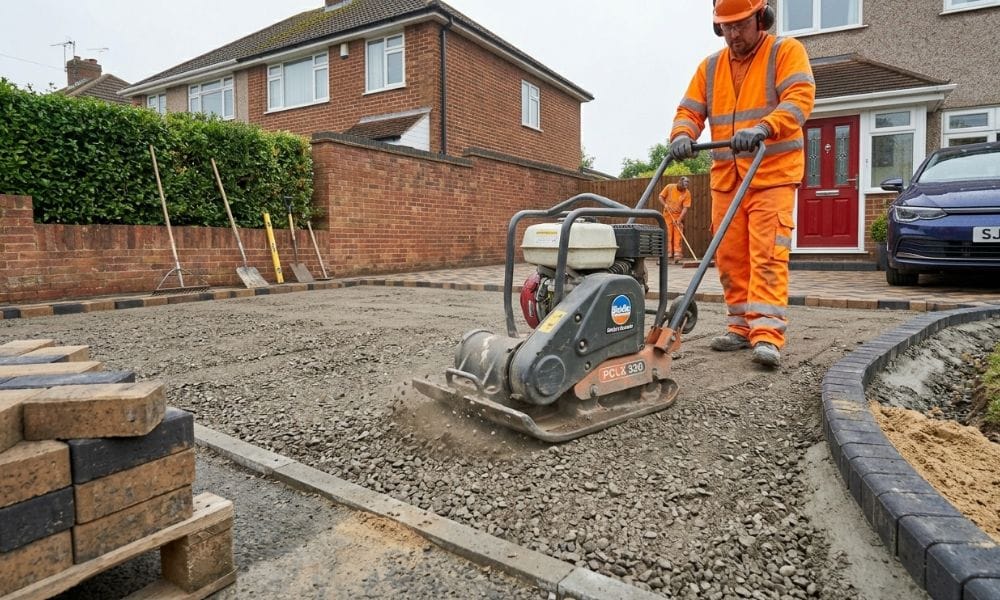
Once the excavation is done, a layer of MOT Type 1 hardcore is laid and compacted in stages using a vibrating plate compactor. This sub-base carries the load of vehicles year after year. After that comes a 40mm sharp sand bedding layer, screeded level, and then the blocks are laid by hand in the chosen pattern. Edge restraints are fitted around the perimeter to hold everything in position. Kiln-dried jointing sand is brushed into the gaps and vibrated in multiple times to lock the structure together.
How long installation takes
Most standard block paving driveways in Stoke-on-Trent take between two and five days. Larger driveways, complex laying patterns, or tricky groundwork can push that out, but for a typical residential job it’s rarely longer than a week. You can walk on the surface straight away and drive on it within 24 to 48 hours once the jointing sand has settled. That’s one clear advantage over resin or concrete, which need considerably longer before you can use them.
Why groundwork makes or breaks it
Sinking, cracking, and block movement are almost always the result of poor groundwork rather than anything wrong with the blocks themselves. Insufficient excavation, weak sub-base material, or inadequate compaction at each stage are the main culprits. When you get quotes for block paving in Stoke-on-Trent, ask specifically what depth they excavate to and what sub-base specification they use. Anyone unwilling to answer that question clearly is worth avoiding.
Block paving costs in Stoke-on-Trent
What you’ll realistically pay in 2026
Block paving in Stoke-on-Trent is priced at around £70 per square metre at Maughan Construction. For a typical single driveway of around 40 square metres, that puts the cost in the region of £2,800. A larger double driveway at 60 square metres would come in around £4,200. Those figures are a useful starting point but every job is different: the amount of excavation required, the complexity of the pattern, the type of block chosen, and whether drainage work is needed all affect the final price.
Our earlier guide to block paving costs covers this in more detail if you want a full breakdown before getting a quote.
What drives the price up
Certain things add to the base cost in a predictable way. Clay pavers cost more than concrete blocks. Intricate patterns like basket weave or circular features take longer to lay than a straight herringbone run. Significant groundwork on sloping gardens or sites with poor drainage adds time and material. And if your existing driveway is concrete in good condition, it may be possible to lay over it, which removes excavation costs.
What the price should include
A proper quote from any reputable contractor in Stoke-on-Trent should include excavation and disposal of existing materials, sub-base installation, edge restraints, block supply and laying, and jointing sand. It should also include VAT if the contractor is VAT-registered. If a quote is significantly cheaper than others and doesn’t explain why, it’s worth asking what’s been left out.
Choosing the right block for your property
Concrete blocks
Concrete block paving is the most widely used option across Stoke-on-Trent and it’s easy to understand why. It’s durable, comes in a wide range of colours and finishes, and sits at a price point that works for most budgets. Quality varies between manufacturers so it’s worth asking what brand of block is being specified. Tobermore is one of the brands Maughan Construction uses, and their blocks hold colour well over time.
Clay pavers
Clay pavers are a step up in cost but they bring natural colour variation that concrete can’t replicate, and the colour genuinely doesn’t fade. They suit period properties particularly well, especially the older terraces and semis you’ll find across Longton, Fenton, and Burslem. If you’re spending money on a driveway that you want to look as good in 20 years as it does on day one, clay is worth considering.
Tumbled and textured blocks
Tumbled blocks have rounded edges and a slightly uneven surface that gives an aged, traditional look from the start. They work well on properties where a brand-new finish would look out of place. Textured and multi-sized blocks open up more contemporary pattern options and are popular in newer-build areas around Trentham, Meir Park, and the Crewe suburbs.
Pattern options
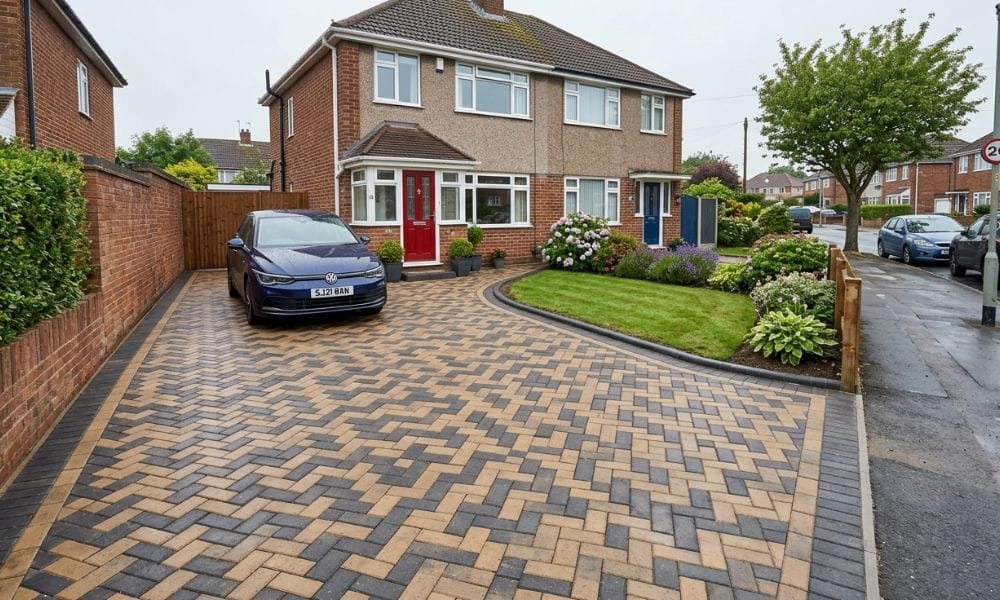
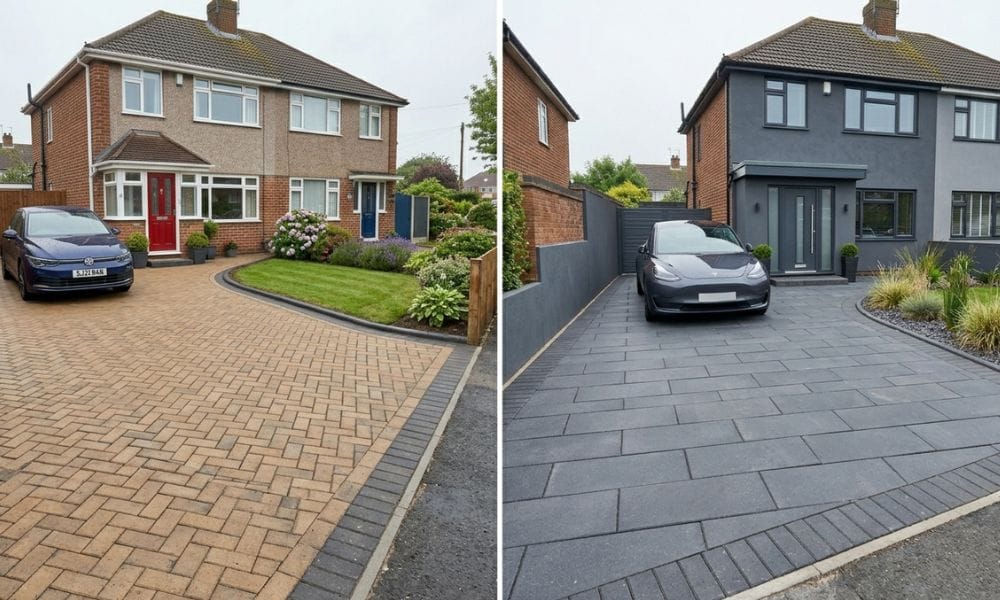
Herringbone is the most structurally sound pattern because of how the blocks interlock under load, which is why it’s recommended for driveways that take regular vehicle traffic. Stretcher bond and stacked patterns are better suited to pedestrian areas like paths and patios. Running bond sits somewhere between the two. Your installer should advise on the most appropriate pattern for your specific driveway based on how it’s used.
What to expect once the work is done
Using your driveway
As mentioned above, foot traffic is fine straight away and vehicles can use the driveway within 24 to 48 hours. Avoid sharp turning movements on the spot for the first few days while the jointing sand fully settles. Heavy vehicles like lorries or skips should stay off it for at least a week.
Ongoing maintenance
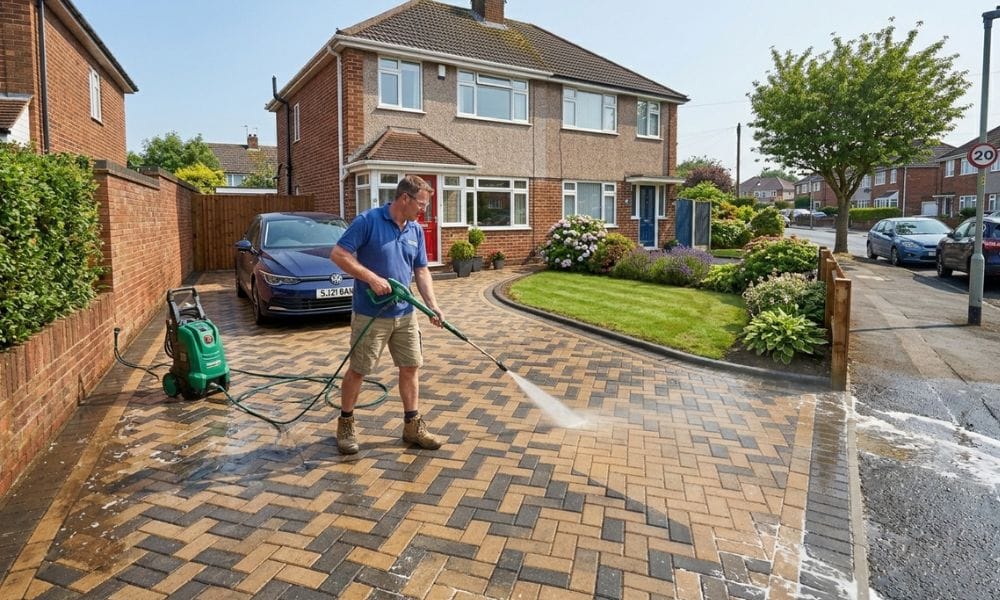
Block paving requires very little upkeep. An occasional jet wash keeps it looking fresh, and treating any weed growth in the joints once or twice a year is about the extent of regular maintenance. Some homeowners apply a sealant every few years to enhance the colour and make cleaning easier, but it’s optional. There’s no need for resealing or resurfacing in the way that tarmac sometimes requires.
For a detailed guide to keeping your driveway in good shape, take a look at our post on how to clean block paving, which covers jet washing technique, sand replacement, and weed treatment.
If a block gets damaged
One of the most practical things about block paving is that repairs are straightforward. A cracked or stained block can be lifted out and replaced without touching the rest of the surface. This is a significant advantage over tarmac or concrete, where damage usually means patching an area or resurfacing entirely. Keeping a small supply of matching blocks from your original installation is a good idea in case you need to repair or extend the driveway later.
Block paving compared to tarmac
Which is better for Stoke-on-Trent homeowners?
This comes up constantly. Tarmac costs around £100 per square metre at the quality end of the market, while block paving sits at around £70 per square metre, so block paving is actually the more affordable option on a per-square-metre basis. The trade-off is that tarmac is faster to install and presents a clean, unfussy look that suits some properties better than a patterned surface.
Block paving wins on longevity: 20 to 30 years with minimal upkeep, compared to 15 to 20 years for tarmac with occasional resealing. It also wins on repairability, design options, and drainage. Tarmac wins on speed and simplicity. Neither is the wrong answer; it genuinely depends on your property, your budget, and how much you care about design options.
Our honest comparison of tarmac versus block paving goes through both options in detail if you’re still undecided.
Thousands of homeowners across Stoke-on-Trent, Newcastle-under-Lyme, and the wider Staffordshire area have made the same decision and ended up with a driveway that still looks good a decade or more later. The key is getting the groundwork right from the start and using blocks that will hold their colour over time. Get those two things right and block paving is about as low-maintenance and long-lasting as driveways get.
Get a free quote for block paving in Stoke-on-Trent
Ted and the team at Maughan Construction offer free, no-obligation quotes across Stoke-on-Trent and the surrounding areas. No deposit is required until you’re completely satisfied with the finished job.
How much does block paving cost in Stoke-on-Trent?
Block paving in Stoke-on-Trent is priced at around £70 per square metre. A typical single driveway of 40 square metres comes in around £2,800, while a larger double driveway of 60 square metres is around £4,200. The exact cost depends on groundwork requirements, block type, and the complexity of the laying pattern. Maughan Construction provides free, no-obligation quotes tailored to your specific driveway.
How long does block paving last?
A properly installed block paving driveway will last 20 to 30 years with minimal maintenance. The lifespan depends largely on the quality of the groundwork: correct excavation depth, a solid MOT Type 1 sub-base, and proper compaction at every stage are what determine how long the surface stays level and stable. Individual damaged blocks can be replaced without touching the rest of the driveway.
Do I need planning permission for block paving in Stoke-on-Trent?
In most cases, no. Permitted development rules allow homeowners to install a new driveway without planning permission, provided the surface is permeable or drainage is directed away from the public highway. If your property is in a conservation area or is a listed building, it’s worth checking with Stoke-on-Trent City Council before proceeding. Maughan Construction can advise you on this during the free quote visit.
How long does block paving installation take?
Most residential block paving driveways in Stoke-on-Trent take between two and five days to complete. Larger driveways or those with complex patterns may take a little longer. You can use the driveway on foot immediately and drive on it within 24 to 48 hours of completion, once the jointing sand has fully settled.
What maintenance does block paving need?
Very little. An occasional jet wash removes dirt and debris, and treating weeds in the joints once or twice a year keeps things tidy. Some homeowners choose to apply a block paving sealant every few years to enhance the colour and simplify cleaning, but this is optional. Unlike tarmac, block paving does not need regular resealing or resurfacing.
Which is cheaper: block paving or tarmac?
Block paving at around £70 per square metre is generally more affordable than quality tarmac, which is priced at around £100 per square metre. Block paving also lasts longer and is easier to repair. Tarmac installs faster and suits homeowners who want a clean, simple finish without pattern or colour choices. Both are good options depending on your priorities.
Does Maughan Construction cover my area?
Maughan Construction installs block paving driveways across all of Stoke-on-Trent including Hanley, Longton, Burslem, Tunstall, Fenton, Meir, Trentham, and surrounding areas. They also cover Newcastle-under-Lyme, Stafford, Crewe, Congleton, Biddulph, and most of Staffordshire and South Cheshire. If you’re unsure whether they cover your postcode, call 07500 042119 and they’ll confirm straight away.