Getting a straight answer on block paving costs is harder than it should be. Most guides either give you a range so wide it’s useless, or they bury the real figures in caveats. This article cuts through that. It covers what block paving actually costs in 2026, what drives the price up or down, and what you can realistically expect to pay for a driveway in Stoke-on-Trent, Staffordshire and Crewe.
All prices here are based on real installation costs. They are guides, not fixed quotes. Every project is different, and the only way to get an accurate figure is to have someone look at your specific property.
Block paving costs at a glance
| 2026 price guide | |
|---|---|
| Typical UK price per m² | £70 to £120 |
| Maughan Construction standard block paving | Around £70 per m² |
| 40m² driveway | Around £2,800 |
| Standard double driveway (45 to 55m²) | £3,150 to £4,400 |
| Tegula (premium block) | £90 to £120 per m² |
| Lifespan | 20 to 30 years |
Prices updated October 2026. Maughan Construction prices include excavation, compacted sub-base, edging, laying and kiln-dried sand jointing.
What does block paving cost per square metre?
The going rate in 2026
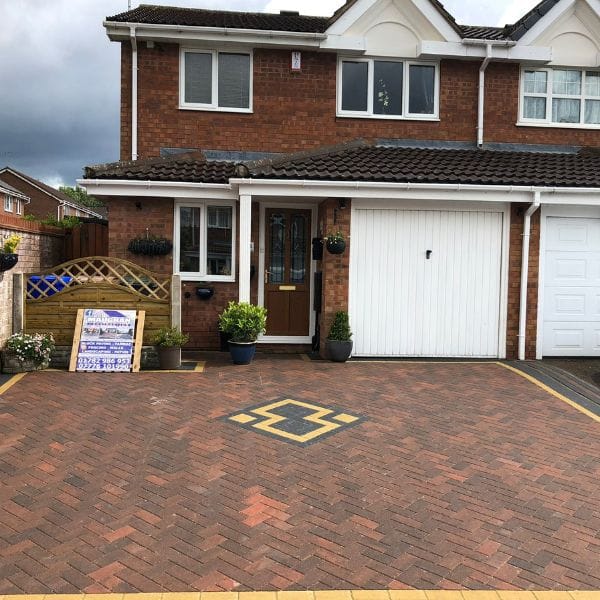
Block paving typically costs between £70 and £120 per square metre for a standard residential driveway, depending on the block type, pattern complexity and groundwork required. At Maughan Construction, standard block paving is priced at around £70 per square metre, which puts the team at the competitive end of the market without cutting corners on materials or sub-base preparation.
For most homeowners, the finished project comes in somewhere between £1,750 and £4,500. A standard single driveway of 25 to 30 square metres sits at the lower end. A double driveway of 45 to 55 square metres sits at the higher end, and larger driveways, old surfaces that need breaking out or difficult ground will push the figure beyond that.
Cost by driveway size
| Driveway size | Approx. square metres | Estimated cost |
|---|---|---|
| Small single | 15-20 sqm | £1,050 – £1,600 |
| Standard single | 25-30 sqm | £1,750 – £2,400 |
| Large single | 35-40 sqm | £2,450 – £3,200 |
| Standard double | 45-55 sqm | £3,150 – £4,400 |
| Large double | 60+ sqm | £4,200+ |
These figures are based on standard concrete blocks and straightforward groundwork. More intricate designs, multiple colours or difficult access will affect the final cost.
Cost by block type
| Block type | Typical installed cost | Best for |
|---|---|---|
| Standard concrete block | Around £70 per m² | Most driveways, best value |
| Tegula (tumbled, textured) | £90 to £120 per m² | Period properties and larger frontages |
| Clay pavers | Upper end of the £70 to £120 range | Long-lasting colour |
| Permeable block paving | More than standard, priced at quote | Front driveways that need to avoid planning issues |
What affects the price of block paving?
Block type and quality
The blocks themselves make up a significant part of the overall cost. Standard concrete blocks are the most affordable option. Clay pavers cost more but offer better colour retention over time. Tumbled or textured finishes add to the per-unit price. Premium ranges from manufacturers like Marshalls or Tobermore sit at the top end, and if you want a specific product by name, expect to pay for it.
The block size also plays a role. Smaller blocks take more time to lay and require more precise cutting at edges, which adds to labour costs even if the materials are similar in price.
Pattern and design
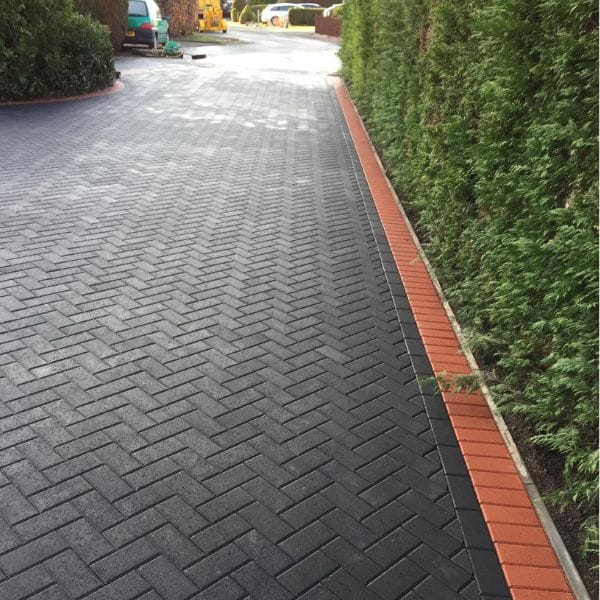
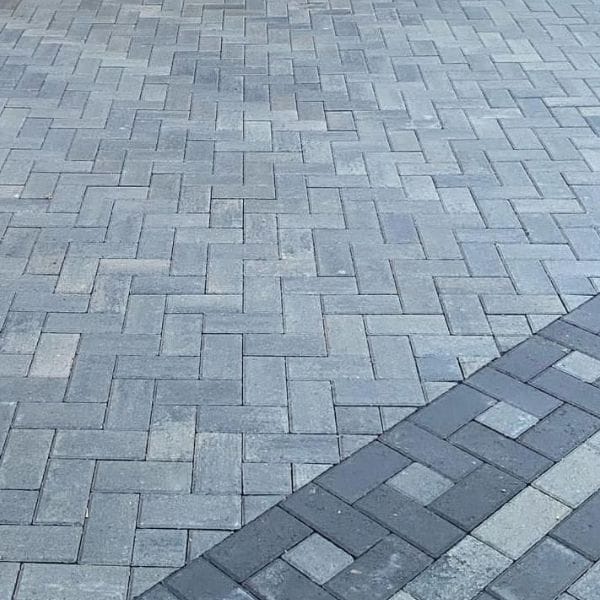
A simple running bond or stack bond pattern is the quickest to lay. Herringbone is more time-consuming but is widely recommended for driveways because it distributes load more effectively, which matters if you have heavier vehicles. Basket weave and more complex multi-directional designs take longer still. The more cuts required, the more time the job takes.
Adding a contrasting border is popular and does add some cost, but it’s rarely a significant addition to the overall price. It tends to be worth it for the finished look. Our block paving ideas and designs guide shows which patterns and colour combinations suit different properties.
Groundwork and existing surface
Groundwork is where costs can vary most significantly, and it’s the part that’s hardest to estimate without looking at the site. If the existing surface is concrete or tarmac that needs breaking out and disposing of, that adds time and skip costs. If the ground is particularly soft or uneven, the sub-base specification will need to be adjusted.
A proper block paving installation requires a compacted stone sub-base, edging to contain the blocks, and kiln-dried sand swept into the joints once the blocks are laid. These aren’t optional extras. They’re what separates a driveway that lasts 20 years from one that starts rocking and sinking within five.
Access and location
Narrow side access, steps, or driveways that require hand-laying rather than mechanical compaction will affect the price. Properties in Stoke-on-Trent town centre, for example, often have tighter access than those in more suburban parts of Staffordshire or Cheshire. It doesn’t make the job impossible, but it does affect how long it takes.
Drainage requirements
If your driveway drains onto a public road and the surface is not permeable, you may need planning permission or a drainage solution built into the design. Permeable block paving, which allows water to drain through the joints into a sub-base designed to absorb it, can add to the cost but avoids planning complications. Our driveway planning permission guide covers the rules in detail, and the same principles apply to block paving.
Extras to budget for
- Removing an old surface: £500 to £1,500, depending on what’s there. Old concrete takes longest to break out.
- Dropped kerb: £800 to £2,000 through your local council if you’re creating or widening vehicle access.
- Drainage: a channel drain or soakaway adds a few hundred pounds as a minimum where the ground doesn’t drain naturally.
How does block paving compare to other surfaces on cost?
| Surface | Cost per m² | 40m² driveway | Lifespan |
|---|---|---|---|
| Block paving (Maughan Construction) | Around £70 | Around £2,800 | 20 to 30 years |
| Tarmac (Maughan Construction) | £100 | £4,000 | 20 to 25 years |
| Tegula | £90 to £120 | £3,600 to £4,800 | 25 to 30 years |
| Resin bound (typical UK) | £70 to £120 | £2,800 to £4,800 | 15 to 20 years |
Block paving vs tarmac
Across the wider market, tarmac is often quoted slightly cheaper than block paving because it’s quicker to lay. At Maughan Construction it works the other way round: standard block paving is around £70 per square metre and tarmac is £100 per square metre. On a 40 square metre driveway, that’s roughly £2,800 for block paving against £4,000 for tarmac.
Beyond the price, the key differences are speed, longevity and repairability. Tarmac goes down in a day or two. Block paving takes longer, but it lasts longer and individual blocks can be lifted and replaced if a section is damaged. With tarmac, repairs tend to be more visible. Our block paving vs tarmac cost comparison goes through this in more detail if you’re weighing up both options.
Block paving vs tegula
Tegula paving is a premium block product with a distinctive tumbled, textured finish. At £90 to £120 per square metre it costs more than standard block paving, adding roughly £1,000 to £2,500 on a 50 square metre driveway, but it delivers a higher-end look that suits period properties and larger frontages. Our tegula paving costs guide covers where it’s worth the extra, and the tegula paving service page has more on what’s included.
For a full comparison across all surfaces including resin, gravel and Indian stone, the complete driveway cost guide covers everything in one place.
Ongoing costs: what to budget for after installation
Maintenance
Block paving is low maintenance, but it does need some attention to stay looking its best. Weeds can establish in the joints over time, particularly in shaded areas. A jet wash once a year and an application of polymeric jointing sand every few years keeps this under control. Our complete guide to cleaning block paving covers the process in detail.
Re-sanding the joints every four to five years is the other regular task. As kiln-dried sand works loose through traffic and weather, the blocks can start to shift slightly. Re-sanding and re-compacting keeps the surface stable. It’s a straightforward job and inexpensive if caught before the blocks have moved significantly.
Repairs
One of the genuine advantages of block paving over poured surfaces is that individual blocks can be lifted and replaced. If a patch is damaged by a fuel spill or a section sinks due to sub-base movement, you don’t need to resurface the whole driveway. A localised repair is usually all that’s required, provided the surrounding blocks are still in good condition.
The long-term lifespan of a well-installed block paved driveway is 20 to 30 years. Over that period, the cost per year compares favourably with cheaper surfaces that need replacing sooner or require more frequent maintenance.
Get a free no-obligation quote
Maughan Construction covers Stoke-on-Trent, Newcastle-under-Lyme, Stafford, Crewe, Congleton and the surrounding areas of Staffordshire and Cheshire. Every installation comes with a full workmanship guarantee and no deposit required until you’re satisfied with the finished result.
Ted and the team are happy to visit and give you an accurate price for your specific property. No pressure, no deposit, just a straight answer on what it will cost and how long it will take. If you’re planning a block paving driveway in Stoke-on-Trent or the surrounding area, our local block paving guide covers what to expect from the job itself.
Request a free quote here or call 07500 042119.
We’ve also installed driveways across Crewe and driveways for customers in Stafford, with decades of experience behind every job.
Frequently asked questions
Block paving typically costs between £70 and £120 per square metre installed for a standard residential driveway. The final figure depends on the block type, laying pattern and groundwork required. Maughan Construction price standard block paving at around £70 per square metre across Stoke-on-Trent and Staffordshire, including sub-base, edging and jointing.
A standard single driveway of 25 to 30 square metres typically costs £1,750 to £2,400. A typical 40 square metre driveway comes to around £2,800, and a standard double driveway of 45 to 55 square metres runs from about £3,150 to £4,400. Removing an old surface, a dropped kerb or a premium block will add to those figures.
Not necessarily. Across the wider market tarmac is often quoted slightly cheaper, but at Maughan Construction standard block paving is around £70 per square metre compared with £100 per square metre for tarmac. On a 40 square metre driveway that is roughly £2,800 for block paving against £4,000 for tarmac. Tarmac is quicker to lay, while block paving lasts longer and can be repaired one block at a time.
A properly installed block paving driveway should last 20 to 30 years with basic maintenance. Re-sanding the joints every four to five years and an annual jet wash is usually all that is needed to keep it in good condition over that period.
Usually not. A new or replacement front driveway does not need planning permission if it uses a permeable surface such as permeable block paving, or if rainwater is directed to a lawn, border or soakaway within the property. Standard impermeable block paving over 5 square metres that drains onto the road does need permission. Conservation areas and listed buildings may have extra restrictions.
Standard concrete blocks in a simple pattern are the most affordable option. Choosing a single colour, a straightforward laying pattern and minimal border features keeps costs down without compromising on durability. For driveways, herringbone is still worth the small extra cost because it holds up better under vehicles.