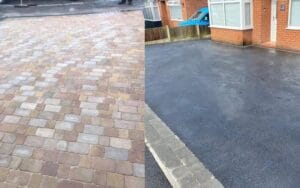
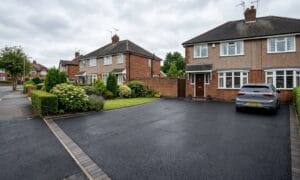
Most homeowners across Stoke-on-Trent, Stafford, Crewe and Staffordshire can install a tarmac driveway without ever submitting a planning application. But the rules have conditions attached, and a handful of circumstances do require permission. Getting it wrong can mean enforcement action, a forced removal and the cost of doing the job twice. This guide covers exactly when you need permission, when you don’t, and what to check before any work starts.
If you’re still weighing up your options for the installation itself, take a look at our tarmac driveways page for a full overview of what’s involved.
The Short Answer
Under Permitted Development Rights (PDRs), you can install a tarmac driveway without planning permission if your property is a standard residential house in England and the driveway drains correctly. The key word there is “drains.” Standard tarmac is an impermeable surface. Under rules introduced in 2008, impermeable driveways that direct water onto the public road require permission. If the drainage is dealt with on your own land, you’re back within permitted development.
Beyond drainage, there are a few other triggers that can require an application. We’ll go through each one below.
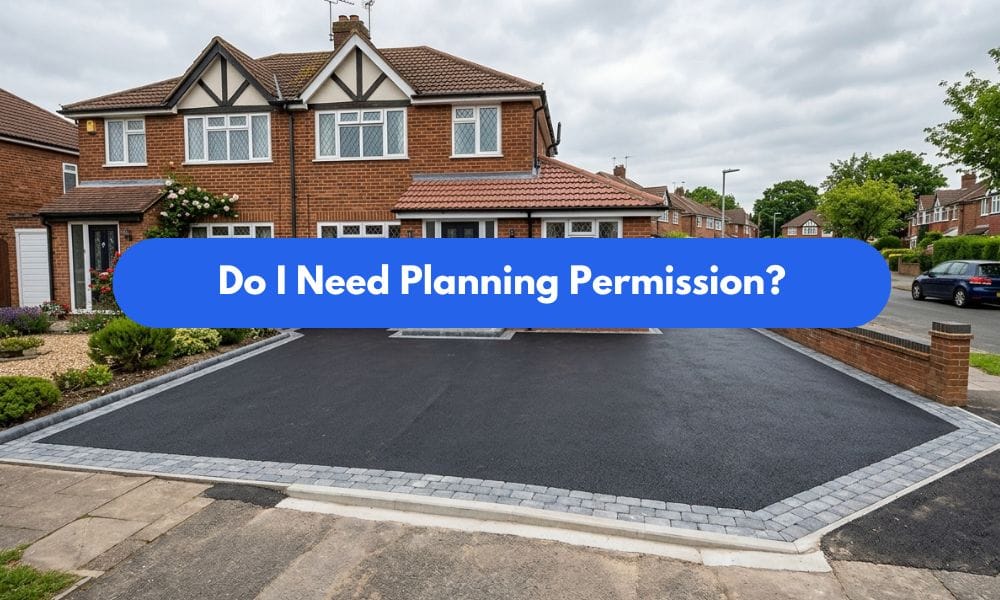
What Are Permitted Development Rights?
Permitted Development Rights are a set of pre-approved permissions that allow homeowners to carry out certain types of work without going through the full planning process. They exist to keep councils focused on developments that actually need scrutiny, rather than routine residential improvements.
For driveways, PDRs cover the installation of hard standing in front of a house which includes tarmac provided certain conditions around size, drainage and location are met. The 2008 update to these rules specifically targeted front garden paving, following concerns about the volume of impermeable surfaces contributing to surface water flooding in residential areas.
Understanding those conditions is where most of the confusion sits, so let’s work through them properly.
When You Don’t Need Planning Permission for a Tarmac Driveway
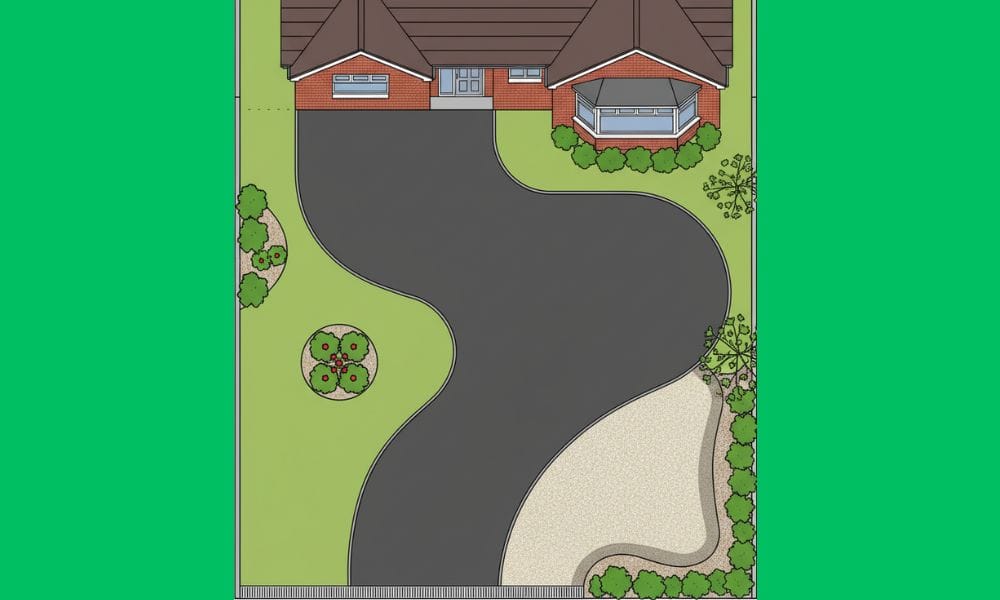
For most residential properties in England including homes across Stoke-on-Trent, Stafford, Crewe and the wider Staffordshire area a tarmac driveway falls within permitted development provided all of the following apply:
- The surface water run-off is directed onto your own land (a lawn, planted border or soakaway) rather than onto the public highway
- The new hard standing does not cover more than half of the total front garden area
- The property is not a listed building
- The property is not in a conservation area, national park or Area of Outstanding Natural Beauty
- The total area of hard standing does not exceed 5 square metres if you are in a designated area
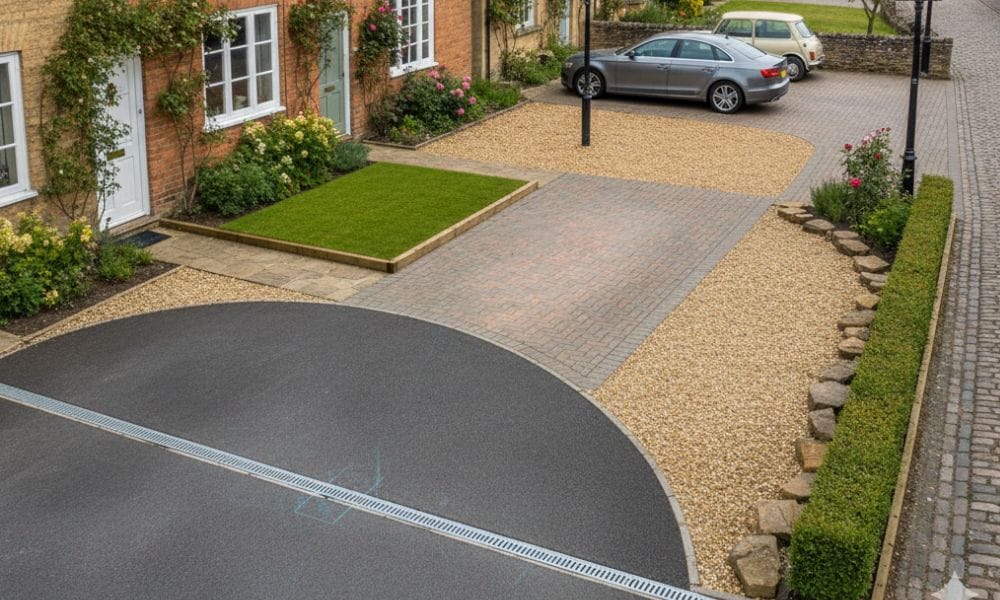
The drainage requirement is easily addressed at the installation stage. A channel drain running across the front of the driveway, directing water to a soakaway or garden border, is standard practice and satisfies the rule without any planning application. A good installer will build this into the design as a matter of course.
Alternatively, permeable or porous tarmac products are available. These allow water to pass through the surface itself, removing the drainage issue entirely. They tend to cost slightly more but can be worth considering depending on your garden layout.
When You Do Need Planning Permission
Several circumstances take a tarmac driveway outside permitted development. A planning application will be required if:
- Your property is a listed building. Any work affecting the character of a listed building or its curtilage requires Listed Building Consent. A tarmac driveway typically falls into this category. The application is free but must be approved before work starts.
- You’re in a conservation area. Local authorities apply tighter controls over visible changes to properties in conservation areas. Tarmac may be objected to on visual grounds, and surface materials like block paving or tegula are often preferred. Our article on block paving vs tarmac driveways covers how the two compare if you’re weighing up your choices.
- The hard standing would cover more than 50% of your front garden (or more than 5 square metres in a designated area).
- Surface water would drain onto the public road and no permeable surface or alternative drainage is incorporated.
- Your title deeds or lease restrict external alterations. Less common, but worth checking — particularly for newer builds or leasehold properties.
Dropped kerbs are a separate matter entirely. Installing a dropped kerb to access a new driveway requires highways approval from your local council this is distinct from planning permission and is needed regardless of whether the driveway itself requires an application. In Stoke-on-Trent, this goes through the City Council highways department. In Stafford and Crewe, through Stafford Borough Council and Cheshire East Council respectively.
Conservation Areas in Staffordshire and Cheshire
There are designated conservation areas across the regions we cover. Parts of Stafford town centre, several areas within Stoke-on-Trent, and parts of Crewe and the surrounding villages all fall within conservation area boundaries.
If your property is within one, it’s worth speaking to the local planning department before choosing a surface material. A pre-application enquiry costs nothing and will tell you whether tarmac is likely to be acceptable or whether an alternative surface would be expected. Going ahead without checking first risks a refusal and the cost of changing the surface after installation.
For properties in conservation areas where tarmac isn’t suitable, block paving and tegula paving are both commonly accepted alternatives that give a similar level of durability. You can read more about how tegula compares to standard block paving in our tegula paving guide.
How to Check Your Property’s Status
Before committing to any driveway installation, it takes about five minutes to confirm your property’s planning status. The Planning Portal at planningportal.co.uk allows you to search by postcode and check whether permitted development applies to your property. Your local council’s website will also show conservation area maps.
If there’s any doubt at all particularly around listed building status or conservation area boundaries a quick call to the planning department is the most reliable route. They won’t make a formal decision at that stage, but they’ll give a clear steer on whether an application is needed.
Getting It Right From the Start
The planning rules around tarmac driveways are more manageable than they’re often made to sound. For the vast majority of homes in Stoke-on-Trent, Stafford, Crewe and across Staffordshire, the work sits comfortably within permitted development once drainage is designed in properly. The situations that genuinely need a planning application listed buildings, conservation areas, oversized hard standings are specific and usually straightforward to identify in advance.
Choosing an installer who understands these regulations means the drainage design, sizing and surface specification will all be factored in from day one. There’s no guesswork, no risk of enforcement issues, and no expensive remedial work down the line.
For more on what to expect from the installation process and what factors affect the overall cost, take a look at our guide to tarmac driveway costs.
Frequently Asked Questions
Do you need planning permission for a tarmac driveway in the UK?
In most cases, no. A tarmac driveway on a standard residential property falls within Permitted Development Rights, meaning no planning application is required. The main condition is that surface water must drain onto your own land rather than the public highway. Properties that are listed buildings, in conservation areas, or in national parks are subject to additional rules and may require an application before work begins.
Does tarmac count as an impermeable surface for planning purposes?
Standard tarmac is an impermeable surface, which means water cannot drain through it. Under the 2008 update to Permitted Development Rights, impermeable driveways that discharge water onto the public road require planning permission. However, if the driveway includes a drainage channel or soakaway directing run-off onto your own land, or if you use a porous tarmac product, the drainage requirement is satisfied and no application is needed.
What happens if I install a tarmac driveway without planning permission when it was required?
Installing a driveway without the required planning permission is a breach of planning control. The local authority can issue an enforcement notice requiring the work to be reversed, and the cost of removal and reinstatement falls on the homeowner. Enforcement action typically follows a complaint or a site inspection, and there is a four-year window in which councils can act. Confirm the position before work starts rather than deal with it after.
Can I replace an existing driveway with tarmac without planning permission?
Yes, in most cases. Replacing an existing driveway with tarmac is treated the same as a new installation under permitted development rules. The same conditions apply: drainage must not discharge onto the public road, the property must not be listed or in a conservation area, and the total hard standing must not exceed the permitted limits. If the existing driveway already had a drainage system in place, replacing the surface material is usually straightforward from a planning perspective.
Do I need planning permission for a dropped kerb as part of my new driveway?
A dropped kerb is a separate approval to planning permission and is required in almost all cases where a new vehicle crossing onto the public highway is created. You need to apply to your local highways authority, not the planning department, for consent to lower the kerb. In Stoke-on-Trent this is Stoke-on-Trent City Council, in Stafford it is Stafford Borough Council, and in Crewe it falls under Cheshire East Council. Work carried out without this approval is illegal and could result in the kerb being reinstated at your cost.