Getting a straight answer to this question is harder than it should be. Most online guides bury the numbers in caveats or quote such wide ranges that the figures are basically useless for budgeting. This guide cuts through that. Below you’ll find real 2026 prices for every main driveway surface, what drives costs up or down, and enough honest detail to know which option actually suits your property before you start calling for quotes. If you want to go straight to a specific surface, our tarmac driveways, block paving, tegula paving and patio installation pages cover each one in full.
The Short Version: Driveway Costs at a Glance
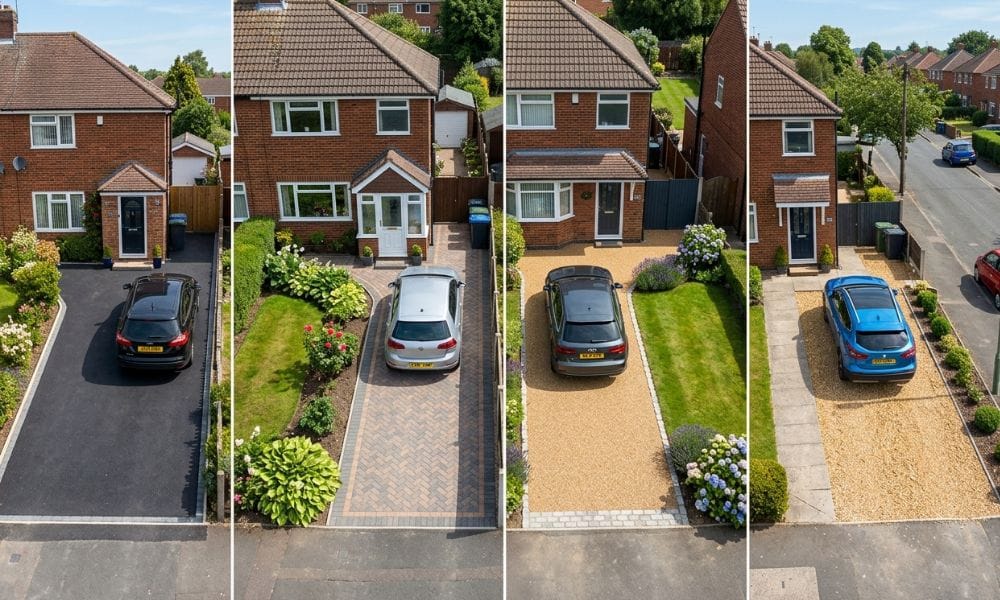
Before going into detail on each surface, here is where the main options sit in 2026:
| Surface | Typical installed cost per m² | 40m² double drive (approx) |
|---|---|---|
| Tarmac | £80 to £100 | £3,200 to £4,000 |
| Block paving | £90 to £130 | £3,600 to £5,200 |
| Tegula paving | £100 to £140 | £4,000 to £5,600 |
| Resin bound | £70 to £120 | £2,800 to £4,800 |
| Indian stone | £70 to £110 | £2,800 to £4,400 |
| Imprinted concrete | £50 to £90 | £2,000 to £3,600 |
| Gravel | £25 to £55 | £1,000 to £2,200 |
These figures include materials, labour, and a standard sub-base on reasonably straightforward ground. They do not include extras like dropped kerbs, drainage channels or removal of a heavily reinforced existing surface. More on those below.
What Every Driveway Costs Regardless of Surface
Before you even choose a material, there are base costs that apply to every installation. These are the bits that catch people out.
Excavation and sub-base. The ground has to be dug out, existing material removed, and a compacted aggregate sub-base installed before any surface goes down. For a standard domestic driveway this typically adds £15 to £25 per square metre to the bill. The better the sub-base, the longer the driveway lasts. Cutting corners here to save money is the most common reason driveways fail early.
Removal of the old surface. If there is existing tarmac, block paving or concrete to break up and take away, expect to add £500 to £1,500 depending on what is there and how much of it. Old concrete in particular takes time to break out.
Dropped kerb. If you are creating a new vehicle access point, or extending an existing one, a dropped kerb from the local council costs between £800 and £2,000 depending on your local authority. This needs to be sorted before work starts.
Drainage. Permeable surfaces do not usually need additional drainage work. Impermeable surfaces like standard tarmac or imprinted concrete need water to run somewhere. If your plot does not drain naturally away from the house and road, a drainage channel or soakaway adds cost. Budget a few hundred pounds minimum.
Tarmac Driveways: Cost and Honest Assessment
Typical cost: £80 to £100 per square metre installed
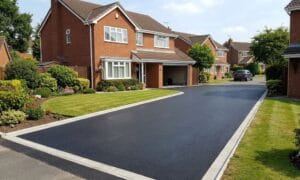
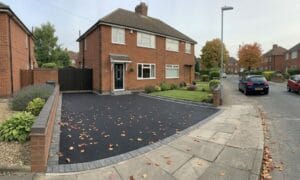
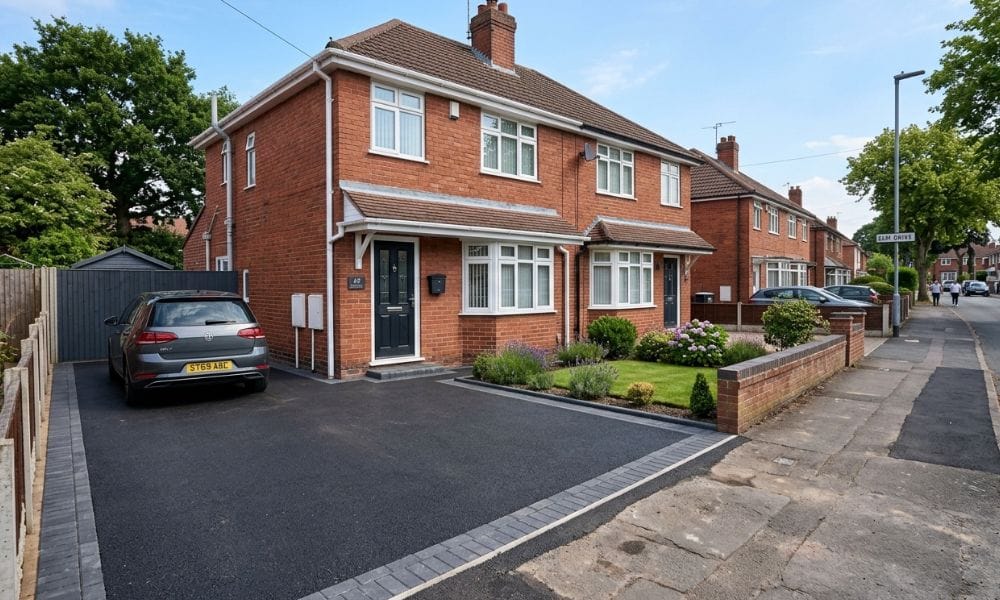
Tarmac is the most practical driveway surface for most UK homeowners. It goes down quickly, handles the British weather well, needs minimal maintenance, and lasts 20 to 25 years on a properly prepared base. On a standard 40 square metre double driveway, you are looking at £3,200 to £4,000 all in.
The quality of the groundwork makes the difference between a tarmac driveway that lasts two decades and one that starts cracking within five years. The surface itself is only as good as what is underneath it. A cheap quote that skimps on sub-base depth will cost more in repairs than the saving was worth.
Coloured tarmac adds roughly 15 to 25 per cent to the price but gives you options beyond standard black. Red is the most popular, particularly with red-brick properties across Stoke-on-Trent and Staffordshire. Grey has grown significantly in popularity on rendered and modern properties.
Where tarmac loses points: it cannot match block paving or tegula for visual variety, and it does need resealing every few years to stay looking its best.
Block Paving: Cost and Honest Assessment
Typical cost: £90 to £130 per square metre installed
Block paving costs more than tarmac and takes longer to install, but it offers design flexibility that tarmac simply cannot match. Colour combinations, laying patterns, contrasting borders, feature panels: none of that is available with a single-surface tarmac driveway. For homeowners who care about how the front of the house looks and want something that adds genuine kerb appeal, block paving is usually worth the extra.
The other advantage is repairability. If a section settles, or a block gets cracked by a heavy vehicle, you lift the affected area and relay it. You are not patching or resurfacing the whole thing. Over a 25 to 30-year lifespan that matters.
Price varies significantly depending on the block type. Standard concrete block paving sits at the lower end of the range. Clay pavers and premium textured blocks push toward the top. The laying pattern also affects cost slightly, as intricate designs like basket weave or circular features take longer to lay than straightforward herringbone.
Our block paving driveway in Newcastle-under-Lyme and charcoal block paving project in Trentham give a realistic idea of what a quality installation looks like in this area.
Tegula Paving: Cost and Honest Assessment
Typical cost: £100 to £140 per square metre installed
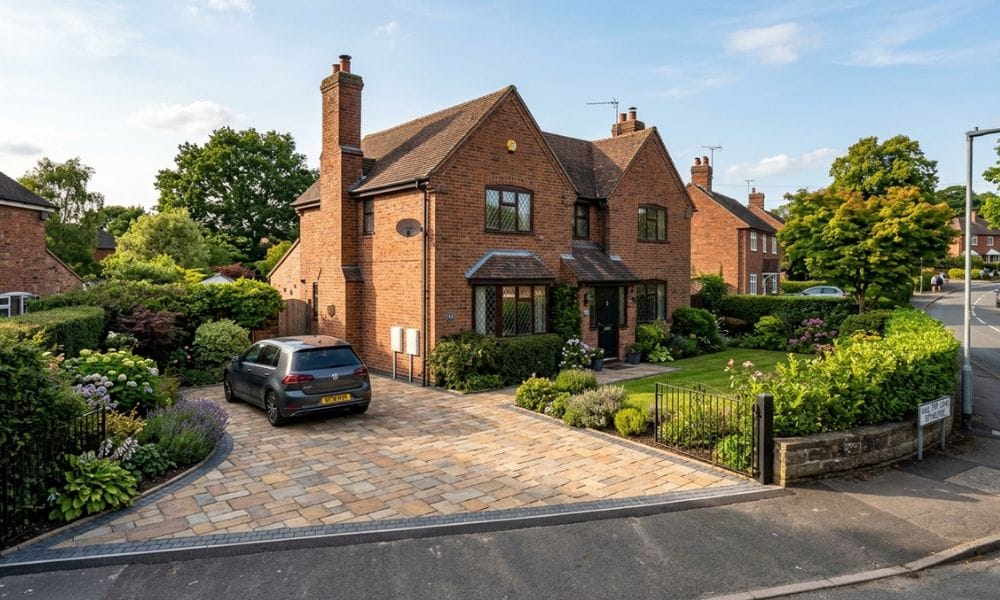
Tegula sits at the premium end of the block paving family. The blocks have a distinctive tumbled, textured finish that gives a more natural and traditional look than standard concrete block paving. Because the blocks are multi-sized and often laid in mixed patterns, the installation takes longer and the price reflects that.
The results can be genuinely impressive. Tegula works particularly well on larger driveways where the design can breathe, and on older or period properties where a contemporary herringbone pattern would look slightly out of place. It also handles heavy vehicle use well because the multi-sized format distributes load effectively across the surface.
If budget is a consideration, tegula is the one area where you feel the premium most acutely. The difference between tegula and standard block paving on a 50 square metre driveway can be £1,500 to £2,500. Whether that is worth it depends entirely on what you are trying to achieve with the frontage.
Resin Bound Driveways: Cost and Honest Assessment
Resin bound has grown considerably in popularity over the past decade, partly because it looks very clean and contemporary, and partly because it is permeable by nature, which means it does not usually require planning permission regardless of size.
The surface is made by mixing natural aggregate with a clear polyurethane resin and applying it over a solid base, typically tarmac or concrete. The finished look is smooth, consistent and available in a wide range of natural aggregate colours. It photographs extremely well, which is why you see it everywhere on property renovation programmes.
The honest assessment: resin is higher maintenance than tarmac or block paving in one specific way. The surface can be damaged by sharp impacts, motor oil left to sit, and weed growth where the base or edges are not properly prepared. It also needs to be laid in dry conditions and temperatures above a certain threshold, which in a British climate means installation windows are limited.
A good quality resin installation on a properly prepared base lasts 15 to 20 years. A poor one, or one laid on a compromised existing surface, can look tired within five.
Typical cost: £70 to £120 per square metre installed
Indian Stone Driveways: Cost and Honest Assessment
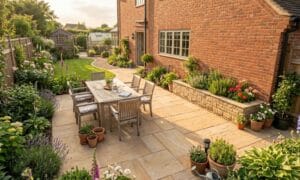
Indian sandstone is one of the most popular choices for patios across the UK, and it works equally well as a driveway surface on properties where the frontage is not too heavily used. It gives a natural, warm-toned finish that suits period properties, rural homes and gardens where a harder, more urban surface would feel out of place.
The practical limitation is vehicle use. Indian stone is not as hardwearing under daily car traffic as tarmac or block paving. On a driveway that takes one car coming and going once a day it performs well. On a wider frontage with multiple vehicles and regular turning movements, it can start to look worn within a few years. Some homeowners use Indian stone for the pathway and patio areas and keep a tarmac or block paving surface for the actual parking.
Our Indian stone patio project in Stoke-on-Trent gives a clear sense of the finished quality when it is laid well.
Imprinted Concrete: Cost and Honest Assessment
Typical cost: £50 to £90 per square metre installed
Imprinted concrete is poured concrete that gets stamped with a pattern while wet to replicate the look of block paving, stone or brick. It comes in at the lower end of the price range compared to genuine block paving or stone, which is its main selling point.
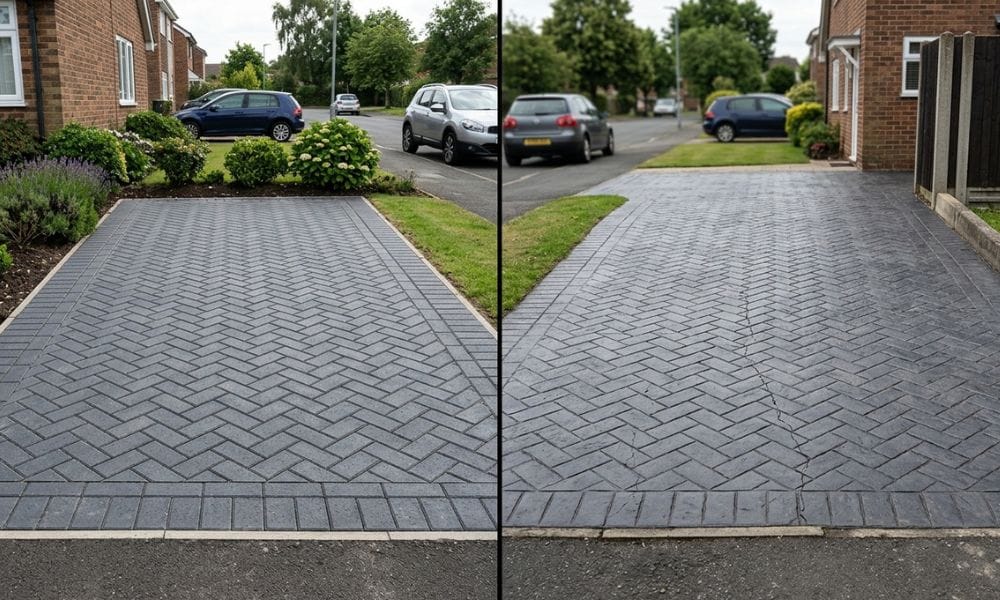
The downside is durability. Concrete is less flexible than tarmac and more prone to cracking, particularly in areas with ground movement or freeze-thaw cycles, which is most of the UK. When imprinted concrete cracks, the repair is visible and never looks quite right. There is no lifting and replacing individual sections the way you can with block paving. A crack runs across the decorative pattern and stays there.
For a garage or utility area that is not the main view of the property, imprinted concrete can be a cost-effective choice. For a front driveway where appearance matters long-term, most homeowners who get quotes on both end up going for genuine block paving and paying the difference.
Gravel Driveways: Cost and Honest Assessment
Typical cost: £25 to £55 per square metre installed
Gravel is the cheapest driveway option by a significant margin, and in the right setting it looks genuinely good. Rural and semi-rural properties in particular suit gravel well. It drains naturally, requires no planning permission, and a basic installation is relatively quick.
The issues with loose gravel are well documented. It migrates off the driveway onto the pavement and road. It gets flicked up by tyres. Weeds grow through it. It is difficult to walk on in heels. And it can be noisy underfoot, which is either a security feature or an annoyance depending on your perspective.
Resin-bound gravel (the type where the stone is bound in clear resin rather than loose) addresses most of these problems but costs significantly more, putting it back into the £70 to £120 per square metre range covered above.
What Drives Driveway Costs Up
A few specific factors push any driveway installation beyond the typical range:
Poor ground conditions. Clay-heavy soil, soft spots, or ground that has been disturbed by old tree roots or drainage work needs more sub-base preparation. This adds time and materials.
Sloped or awkward access. Driveways on a significant slope require careful drainage management and take longer to lay accurately. Restricted vehicle access to the site slows the job down and can add meaningful cost.
Significant existing groundwork. Removing an old reinforced concrete base, breaking out old foundations, or dealing with underground drainage that needs rerouting all add to the bill.
Premium block or stone choices. Clay pavers, natural granite setts and imported Indian sandstone cost more than standard concrete block paving. That difference flows through to the final price.
How to Get a Reliable Quote
The biggest mistake homeowners make is getting one quote and going with it. Get three. Not to find the cheapest, but to understand whether you are being quoted for the same job. A quote that is significantly lower than the others is usually cutting something: sub-base depth, quality of materials, or drainage provision.
Ask every contractor to specify the sub-base depth, the material grade, and what is included in waste removal. A quote that does not address those things is not a quote you can compare meaningfully against others.
For a full breakdown of how tarmac costs compare specifically against block paving, our article on whether block paving or tarmac is cheaper goes into a lot more detail on that specific comparison.
Frequently Asked Questions
What is the cheapest type of driveway?
Loose gravel is the cheapest driveway option at around £25 to £55 per square metre installed. If you want a bound surface that stays in place and requires little maintenance, imprinted concrete comes in next at £50 to £90 per square metre. Tarmac offers the best balance between cost and longevity for most homeowners, typically running from £80 to £100 per square metre for a quality installation on a properly prepared base.
How much does it cost to tarmac a double driveway?
A double driveway is typically around 40 to 50 square metres. At £80 to £100 per square metre for a full installation including excavation, sub-base and wearing course, you are looking at £3,200 to £5,000 depending on the size and any additional groundwork needed. Coloured tarmac adds roughly 15 to 25 per cent to those figures. The quote should always include sub-base preparation and waste removal, not just the tarmac itself.
Is block paving worth the extra cost over tarmac?
It depends on what you want from the driveway. Block paving costs £10 to £30 more per square metre than tarmac, but it offers far more design flexibility and is easier to repair if sections settle or get damaged. If visual appearance matters and you want a surface that adds genuine kerb appeal, block paving is usually worth paying for. If you want the most practical, lowest-maintenance surface at a reasonable price, tarmac is the stronger choice. Our detailed comparison of both covers this in full.
Do I need planning permission for a new driveway?
For most residential driveways, no planning permission is required under permitted development rights. The main condition to be aware of is drainage: if you are laying an impermeable surface larger than 5 square metres that would direct water onto the public highway, you may need permission or will need to incorporate drainage. Permeable surfaces like resin bound or permeable block paving generally do not trigger this requirement. Conservation area properties are worth checking with the local authority first.
How long does a new driveway last?
Lifespan varies considerably by surface and installation quality. A well-installed tarmac driveway on a properly compacted sub-base typically lasts 20 to 25 years. Block paving and tegula can last 25 to 30 years or more, with individual blocks replaceable if damaged. Resin bound driveways last 15 to 20 years with reasonable maintenance. Imprinted concrete is more variable, often showing cracking within 10 to 15 years in areas with ground movement or heavy use. In every case, the quality of the sub-base preparation is the single biggest factor in how long the surface performs.