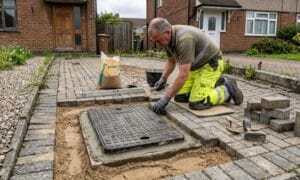
A tarmac driveway installed properly will last 20 to 25 years. How long yours actually lasts depends partly on the installation quality and partly on what happens to it afterwards. The good news is that tarmac is one of the lower-maintenance driveway surfaces available. The bad news is that the small amount of maintenance it does need often gets ignored, and a surface that could last 25 years ends up looking tired at 12.
This guide covers what maintenance a tarmac driveway actually needs, what to do when problems appear, and what to avoid. If you need a tarmac driveway installed or replaced in Stoke-on-Trent or the wider Staffordshire area, Maughan Construction offer free quotes with no deposit required.
Year-Round Maintenance: The Basics
Most of tarmac maintenance is just keeping things clean and catching problems early. There’s no annual treatment required in the way there is with timber decking, no sealing needed every few years in the way block paving jointing needs topping up. The core maintenance is simpler than most people expect.
Keep drains and gullies clear. This is the most important thing on the list. Blocked drainage causes water to back up and sit on or under the surface. On clay-heavy ground, which covers most of Stoke-on-Trent, Stafford and a lot of Staffordshire generally, water that can’t drain goes sideways into the sub-base instead. That causes movement. Movement causes cracking.
Clear gullies twice a year at minimum: once in autumn after leaves have fallen, once in spring. It takes ten minutes and prevents a significant amount of long-term damage.
Sweep regularly. Debris sitting on a tarmac surface isn’t usually a problem in itself, but it holds moisture against the surface. In cold weather, that moisture freezes, expands, and accelerates surface wear. A regular sweep, particularly in autumn and winter, is worth doing.
Keep oil spills off the surface. Oil and petroleum products soften bitumen. A diesel or oil leak left sitting on a tarmac surface will cause it to soften and deform, particularly in warm weather. Clean any oil spills promptly with a degreaser — a proprietary tarmac degreaser is best, though dish soap works as a first response.
Seasonal Maintenance
Winter
Frost and freeze-thaw cycles are the biggest weather-related threat to a tarmac driveway. Water gets into any small crack or surface void, freezes overnight, expands, and forces the crack wider. A hairline crack in October can be a significant fracture by March if it isn’t addressed.
Before winter, check the surface for any cracks that have appeared. Small cracks can be filled with a tarmac repair product available from builders’ merchants. It’s not a permanent fix in the way a proper repair would be, but it stops water getting in and buying you another season.
Avoid using metal-bladed snow shovels on tarmac. They can chip and score the surface. A plastic-bladed shovel or a brush is better.
Grit and rock salt are fine on tarmac and won’t damage the surface directly, though salt residue should be washed off in spring to prevent staining.
Summer
Hot weather is the other tarmac concern. Standard tarmac softens slightly at high temperatures — this is normal and not a sign of a failing surface. What it does mean is that parking a heavy vehicle in the same spot every day during a prolonged heatwave can cause slight indentation.
In practice, this is rarely a major issue for standard domestic cars. It matters more for vans, lorries, and any vehicle that sits static for long periods. If you park a heavy vehicle on your driveway regularly, a section of block paving or concrete flags under the standing points is worth considering.
Avoid putting kickstands or chair legs directly onto a hot tarmac surface. They’ll leave marks. Put a board or pad underneath.
Dealing With Common Problems
Cracks
Small, isolated cracks are normal on any tarmac surface over time. The key is catching them before they grow. A crack under 5mm wide that’s confined to the surface can be filled with a cold-applied tarmac repair compound and will hold for a season or two.
Wider cracks, cracks that go through the full depth of the tarmac, or cracks that are spreading across a wide area are a different matter. These indicate base failure rather than surface wear and need a professional assessment. Filling them is temporary at best. The repair vs replace guide covers the decision in detail.
Potholes
A pothole is what happens when a crack is left untreated through a winter. Water gets in, freeze-thaw action breaks out the material around the crack, and a hole forms. Small potholes can be repaired with tarmac cold-lay repair material, compacted in layers. Larger potholes, or potholes that keep reforming after repair, need professional attention.
Edge Deterioration
The edges of a tarmac driveway are more vulnerable than the centre because there’s less material mass at the perimeter. Without edging blocks to contain it, tarmac edges can crumble and break away over time. If your driveway has edge deterioration but the main body is sound, having the edges repointed or re-edged with block paving is a cost-effective fix that extends the life of the whole surface.
Surface Oxidisation
Tarmac gradually oxidises and lightens in colour over years of sun exposure. This is a cosmetic process rather than a structural one — a tarmac surface that has oxidised from black to dark grey is still structurally sound. Some contractors offer re-sealing treatments to restore the dark colour, but these are cosmetic rather than protective and aren’t usually necessary for the health of the driveway.
When to Call a Professional
DIY tarmac maintenance has limits. Small cracks and potholes are within reach for a homeowner with basic tools and the right materials. Anything that involves sub-base failure, widespread cracking, significant drainage problems, or edge collapse needs a professional contractor.
The rule of thumb: if you’ve repaired the same spot twice and it keeps failing, the problem is below the surface rather than on it. Filling the surface again won’t solve it.
Maughan Construction carry out tarmac repairs and full replacements across Stoke-on-Trent, Newcastle-under-Lyme, Stafford, Congleton, Crewe, Biddulph and the wider Staffordshire area. Ted Maughan will give you a straight assessment of whether repair or replacement makes sense for your specific driveway. Call 07500 042119 or 01782 607715.
For related reading, see the full guides on how long a tarmac driveway lasts, when to repair vs replace, and tarmac driveway costs.+
How often does a tarmac driveway need maintenance?
Routine maintenance is minimal. Clear drains twice a year, sweep regularly, clean oil spills promptly, and check for cracks in autumn before winter sets in. A tarmac driveway doesn’t need annual sealing or treatment in the way other surfaces do.
Can I repair a tarmac driveway myself?
Small cracks and potholes can be filled with cold-lay tarmac repair compound available from builders’ merchants. This works well as a temporary or seasonal fix on isolated surface damage. Widespread cracking, sub-base failure, or potholes that keep coming back need professional attention.
Does hot weather damage a tarmac driveway?
Tarmac softens slightly in high heat, which is normal. For standard domestic cars this rarely causes a problem. Heavy vehicles parked in the same spot during a prolonged heatwave can cause slight indentation. Avoid putting pointed chair legs or kickstands directly on a hot tarmac surface.
What should I do if oil spills on my tarmac driveway?
Clean it up promptly. Oil and petroleum products soften bitumen and can cause the surface to deform if left to soak in. Apply a proprietary tarmac degreaser or washing-up liquid as a first response, work it in with a brush, and rinse off. Don’t leave spills sitting on the surface, particularly in warm weather.
My tarmac has turned grey — is it failing?
Not necessarily. Tarmac gradually oxidises over time, lightening from black to dark grey. This is a surface colour change rather than a structural failure. The driveway is likely still perfectly sound. Check for cracking, drainage problems, and surface stability. If those are all fine, the grey colour is cosmetic rather than a sign of a problem.
How long should a tarmac driveway last with proper maintenance?
A properly installed tarmac driveway maintained well should last 20 to 25 years. The biggest factors in longevity are installation quality, good drainage, and catching surface damage early before winter freeze-thaw cycles can worsen it.