Most driveways don’t fail overnight. They go gradually: a crack here, a dip there, a section of block paving that’s shifted just enough to trip over in the dark. At some point you notice it’s looking tired, and then the question becomes whether to patch it or start again.
Getting that call wrong is expensive either way. Spend money on repairs when replacement was the right answer and you’ll be spending again in two years. Replace when repairs would have done the job and you’ve spent three or four times what you needed to. This guide is about making the right call.
If you’re in Stoke-on-Trent, Newcastle-under-Lyme, Stafford or the wider Staffordshire area and you want a professional assessment, Maughan Construction can visit and give you a straight answer on whether repair or replacement makes more sense for your specific driveway.
The Honest Truth About Driveway Repairs
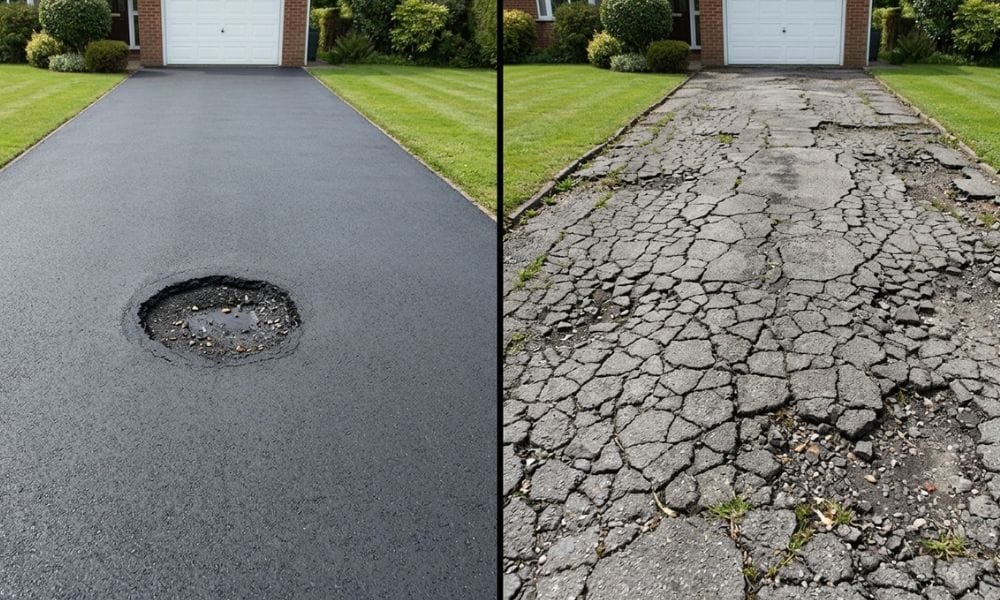
Repairs are legitimate. They’re not always a short-term sticking plaster. A tarmac driveway with a single isolated crack or a pothole that’s formed after a pipe repair can be patched cleanly and last many more years. Block paving where a handful of blocks have sunk around a drain can be lifted, the sub-base corrected, and the blocks reset — job done.
The problem is that repairs only work when the issue is localised. Once the problem is structural or widespread, patching becomes cosmetic. You’re spending money to make it look better for 12 months, then spending again.
Signs Your Driveway Can Be Repaired
These are situations where repair is likely the right call:
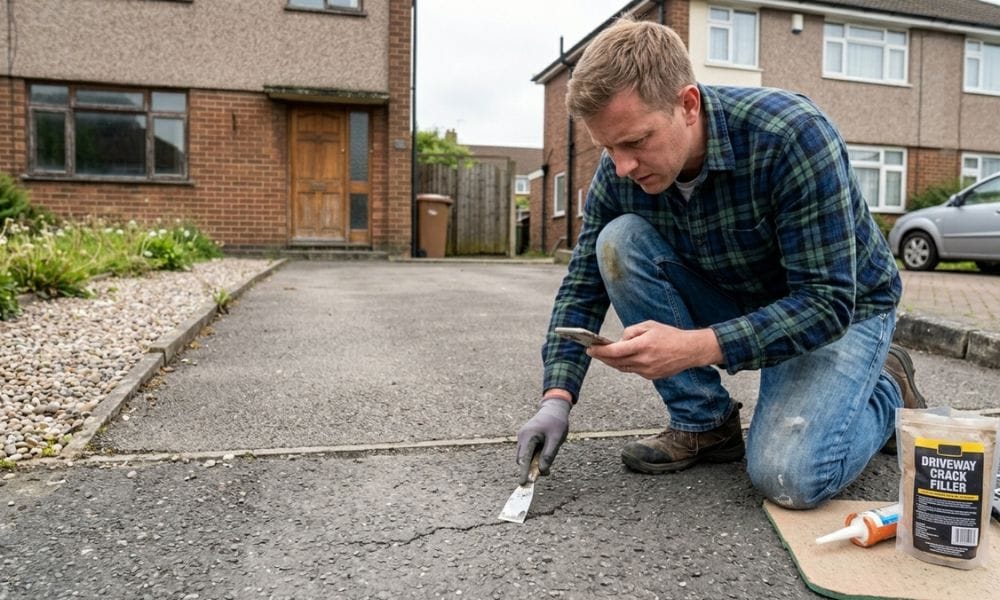
Isolated potholes or cracking. A single pothole, or cracks concentrated in one area (usually near a drain, a tree root, or a previous repair), can be cut out and patched. The surrounding material is still sound, so the patch has something solid to bond to.
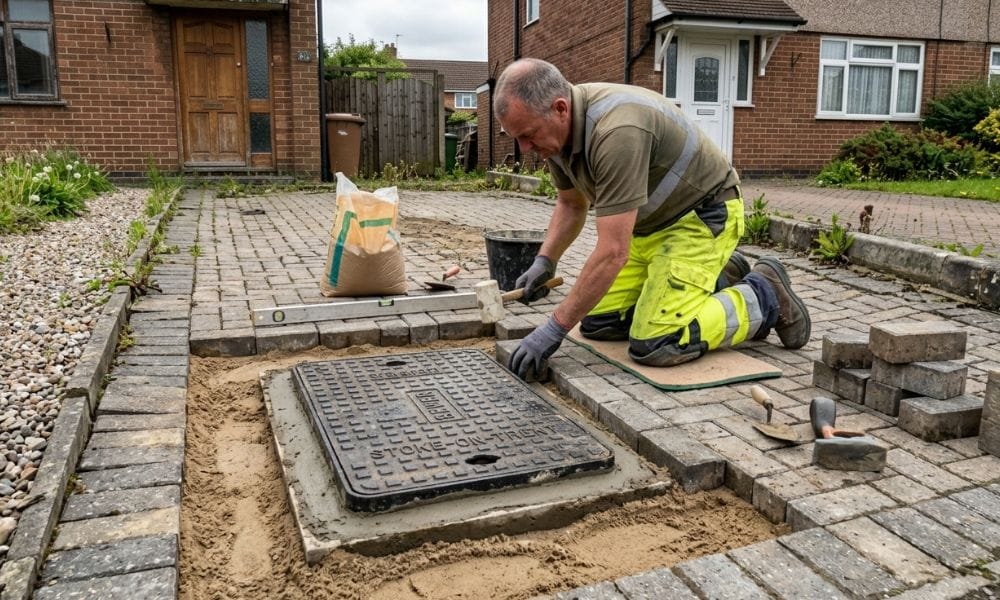
Sunken blocks around drainage. Block paving sinks around manholes and gullies because the sub-base around them is disturbed during installation or maintenance. If the sunken area is confined to a small zone and the rest of the driveway is solid, lifting and relaying those blocks is straightforward.
Surface wear on tarmac, not structural failure. Tarmac loses its surface aggregate over time. If the driveway feels a bit rough underfoot, looks faded and oxidised, but is structurally flat with no cracking through the full depth, a surface retread can work well. This involves applying a new thin layer of tarmac over the existing surface.
Edge damage. The edges of a driveway take more punishment than the centre. If your edging blocks have shifted or your tarmac edge has broken away, but the main body of the driveway is fine, repairing the edge is a sensible and relatively inexpensive fix.
Signs Your Driveway Needs Replacing
Alligator cracking across a wide area. When tarmac develops a pattern of interconnected cracks resembling scales or alligator skin across a large section, the base has failed. Patching alligator cracking doesn’t work — the underlying movement just breaks through any repair within months.
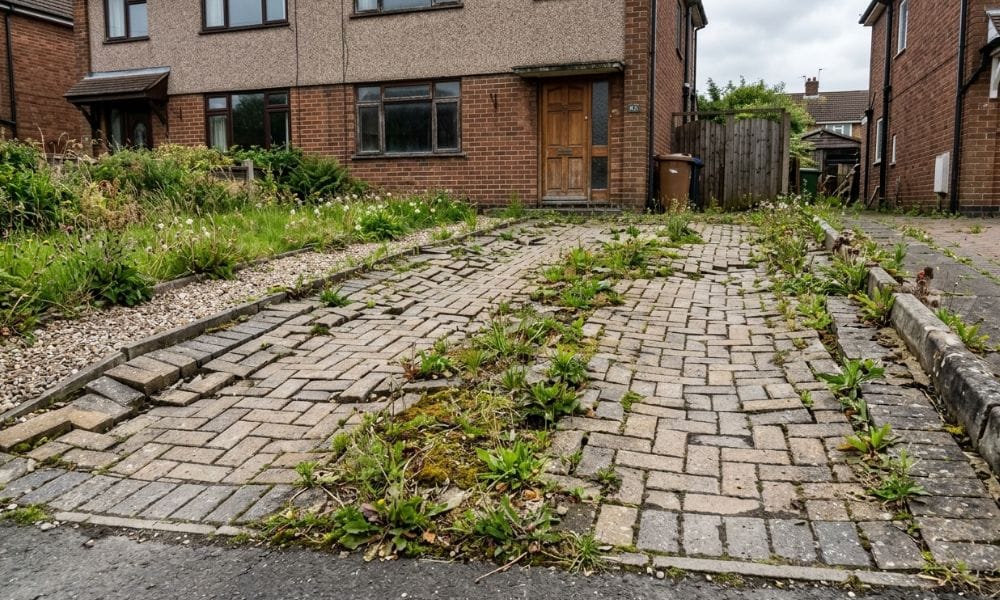
Widespread sinking or unevenness. If the surface has multiple dips and high points, water pools in several places, and the overall level is inconsistent, the sub-base has moved or degraded. No surface repair addresses that. The driveway needs to come up, the sub-base sorted, and new surfacing laid on top.
Multiple previous repairs that haven’t held. If you’ve had three patches in five years and they keep failing, that’s the sub-base talking. Repair is not going to win that argument.
Block paving with widespread settlement. A few sunken blocks is a repair. Blocks that have moved, rotated, or sunk across 30 to 40 per cent of the driveway surface is a replacement — especially if the bedding sand has washed out and the blocks are loose underfoot.
Age. Tarmac typically lasts 15 to 25 years depending on installation quality and traffic. If your driveway is 20 years old and starting to show problems, putting repair money into it is usually false economy. The rest of the surface will follow whatever’s failing now.
Tarmac: Repair or Replace?
Tarmac is arguably the easiest surface to assess. The key question is whether the cracking or damage is surface-level or goes through to the base.
Surface-level damage: cracks that are hairline or superficial, localised oxidisation, minor edge damage. These can be repaired.
Base failure: cracking that goes through the full depth of the tarmac, widespread unevenness, sections that move when you walk on them, or water consistently pooling in the same spots. These need replacement.
A full tarmac driveway replacement at the quality end of the market costs around £100 per square metre. That sounds like a lot against a repair bill of a few hundred pounds, but if the driveway needs replacing in 18 months anyway, the repair money is lost.
For homeowners across Burslem, Fenton, Meir, and the rest of the ST postcode area, the question is always: what’s the realistic lifespan of a repair on this particular surface? A good contractor will give you an honest answer. If they can’t tell you how long a repair is likely to last, that’s worth noting.
Block Paving: Repair or Replace?
Block paving has one advantage over tarmac when it comes to repairs: individual blocks can be lifted and reset without disturbing the whole surface. That makes localised repairs genuinely effective.
The calculation changes when damage is widespread. Lifting and relaying half a driveway costs nearly as much as a full replacement, and you end up with blocks that don’t quite match the originals (colours fade over time) and a new sub-base only under part of the surface.
As a rough guide: if more than 25 to 30 per cent of the driveway needs attention, get a replacement quote alongside the repair quote and compare them honestly. For smaller areas of movement or isolated sections around drains and manholes, repair is almost always the right answer.
Block paving costs around £70 per square metre for a full replacement. Repairs are priced by the job rather than the square metre, but as a benchmark, a typical localised repair to a small sunken section might run to £150 to £400 depending on how much lifting and relaying is involved.
Questions to Ask Any Contractor
Before agreeing to either a repair or a replacement, it’s worth asking a few things:
What is causing this problem? A good answer names the specific cause: sub-base failure, frost damage, root intrusion, or water ingress. A vague answer is a warning sign.
How long should this repair last? If they can’t give you a realistic timeframe, they’re not confident in the repair.
What happens if this repair fails within a year? Know before you commit whether there’s any kind of guarantee on the work.
Is there any situation where you’d recommend replacement over repair here? A contractor whose answer is always “patch it” isn’t giving you independent advice.
Maughan Construction have been carrying out driveway repairs and replacements across Staffordshire for 30+ years. Ted Maughan will tell you straight whether a repair makes financial sense or whether you’d be throwing money at a surface that needs replacing. There’s no deposit required until you’re happy with the work, and every job carries a full workmanship guarantee.
Call 07500 042119 or 01782 607715 for a free assessment.
How to Extend the Life of Any Driveway
Whether you repair or replace, a few things will keep the surface in better condition for longer:
Keep drains and gullies clear. Blocked drainage is one of the most common causes of sub-base failure, especially in Stoke-on-Trent’s clay-heavy ground. Water that can’t drain goes sideways instead.
Address small cracks early. A hairline crack in tarmac is a £50 problem if you catch it before winter. After a frost cycle, it can become a £2,000 problem.
Avoid overloading the surface. Most domestic driveways are designed for standard car traffic. Regular heavy vehicle access, skips, or delivery lorries can accelerate wear, particularly around the edges.
For block paving, re-sand the joints every few years. Kiln-dried sand in the joints prevents blocks from moving and keeps weeds from establishing.
For related reading, see our full guides on how much a tarmac driveway costs, how long a tarmac driveway lasts, and block paving costs in 2026.
How do I know if my driveway needs repairing or replacing?
If the damage is localised — a single pothole, a few sunken blocks, or cracking in one area — repair is usually the right call. If cracking is widespread, the surface is uneven in multiple places, or you’ve had repeated repairs that haven’t lasted, replacement is more likely to be cost-effective long-term.
How much does driveway repair cost in Stoke-on-Trent?
It depends on the type and extent of the damage. Small localised block paving repairs or tarmac pothole patching typically cost between £150 and £400. Larger repairs covering more of the surface will cost more, at which point it’s worth getting a replacement quote to compare.
What is alligator cracking on a tarmac driveway?
Alligator cracking is a pattern of interconnected cracks that looks like the scales of an alligator or crocodile. It indicates base failure rather than surface wear, meaning the sub-base beneath the tarmac has moved or degraded. Patching alligator cracking is generally ineffective — the movement below the surface breaks through any repair within months.
Can you repair block paving without replacing the whole driveway?
Yes, and for localised issues it’s often the best option. Individual blocks can be lifted, the sub-base corrected underneath, and the blocks relaid. This works well around drains, manholes, or small sunken sections. If more than 25 to 30 per cent of the driveway needs attention, a full replacement is worth pricing alongside the repair.
How long should a tarmac driveway repair last?
A well-executed repair to a tarmac driveway — where the cause has been properly addressed and the surrounding material is still sound — should last five to ten years. If a contractor can’t give you a realistic lifespan estimate for a proposed repair, that’s worth pressing them on before you agree to the work.
Does Maughan Construction do driveway repairs in Stoke-on-Trent?
Yes. Maughan Construction carry out both driveway repairs and full replacements across Stoke-on-Trent, Newcastle-under-Lyme, Stafford, Congleton, Crewe and the wider Staffordshire area. Ted Maughan will assess the driveway and give you an honest recommendation on whether repair or replacement makes more financial sense. Call 07500 042119 or 01782 607715 for a free visit.