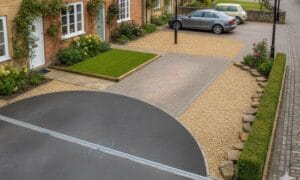
Weeds have no business growing through tarmac, yet every summer we get calls from homeowners across Stoke-on-Trent asking why green shoots are pushing up through a surface that should be solid. The short answer: weeds rarely grow through healthy tarmac. They grow through cracks, joints and edges where the surface has been compromised, or they seed themselves on top in windblown dirt. The good news is that both problems are preventable. At Maughan Construction, we have laid tarmac driveways across Staffordshire and Cheshire for over 30 years, and the driveways that stay weed-free are the ones that were installed properly and looked after with a bit of routine care. Here is what actually works.
How to Stop Weeds on Tarmac: The Short Version
- Sweep the surface regularly so leaves and dirt never build up into a seedbed.
- Pull weeds while they’re young and take the whole root out.
- Spot-treat stubborn weeds with a systemic weed killer rather than burning off the tops.
- Fill cracks every spring before weeds find them.
- Reseal every few years to close the fine pores where moss and seeds take hold.
- Lay it right in the first place, with a weed control membrane, a well-compacted sub-base and proper edging.
Why Weeds Appear on Tarmac in the First Place
A weed needs three things: a seed, a bit of soil or organic matter, and light. Tarmac blocks all three when it is intact. Problems start in one of two ways.
The first is from below. If the driveway was laid without a proper sub-base or weed control membrane, dormant seeds and deep-rooted perennials like dandelions, couch grass and horsetail can force their way up through weak spots. Horsetail is the worst offender in this area. It is common on older plots around Biddulph and Kidsgrove and it will find any gap you give it.
The second is from above. Leaves, moss and dust collect on the surface, break down into a thin layer of organic matter, and airborne seeds settle in it. This is why weeds so often appear along edges and in corners where debris gathers.
Understanding which type you are dealing with matters, because the fixes are different.
Get the Installation Right and Most Weeds Never Appear
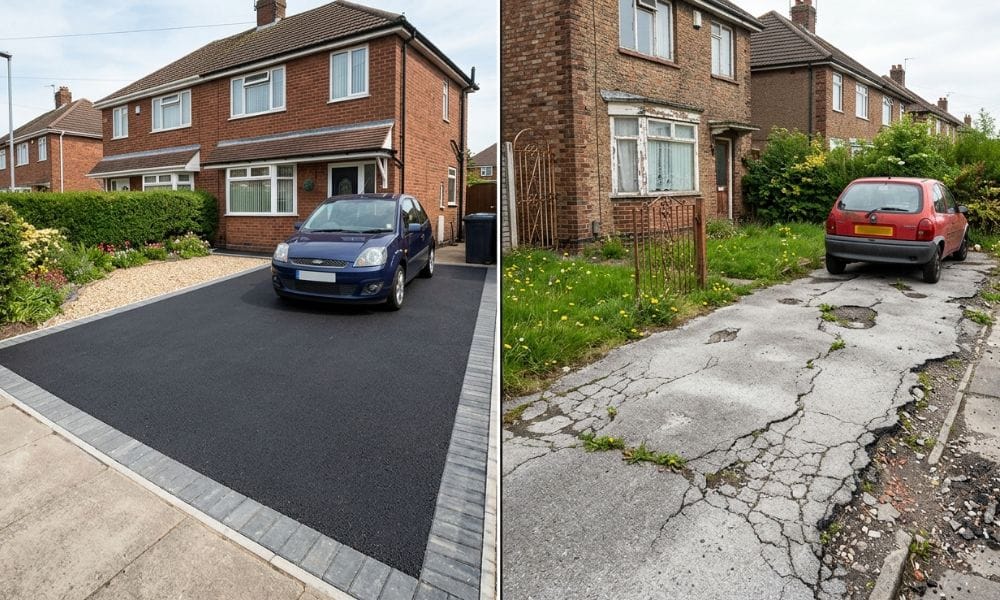
The single most effective weed prevention measure happens before any tarmac is laid. A geotextile weed control membrane installed beneath the sub-base stops growth from below by blocking light and physically barring roots. It needs to be laid evenly, with overlapped joints, extending right to the edges of the excavation. Skip it, or lay it badly, and you are relying entirely on the tarmac itself to hold weeds back for the next 20 years.
Proper compaction matters just as much. A well-compacted sub-base and a machine-laid tarmac surface leave no voids for roots to exploit. Many of the weed-riddled driveways we are asked to replace around Newcastle-under-Lyme and Stafford were laid thin, on poor foundations, by firms cutting corners. The weeds are a symptom. The real problem is underneath. If your driveway is at that stage, our guide on when to repair vs replace your driveway will help you make the call.
Keep the Surface Clean
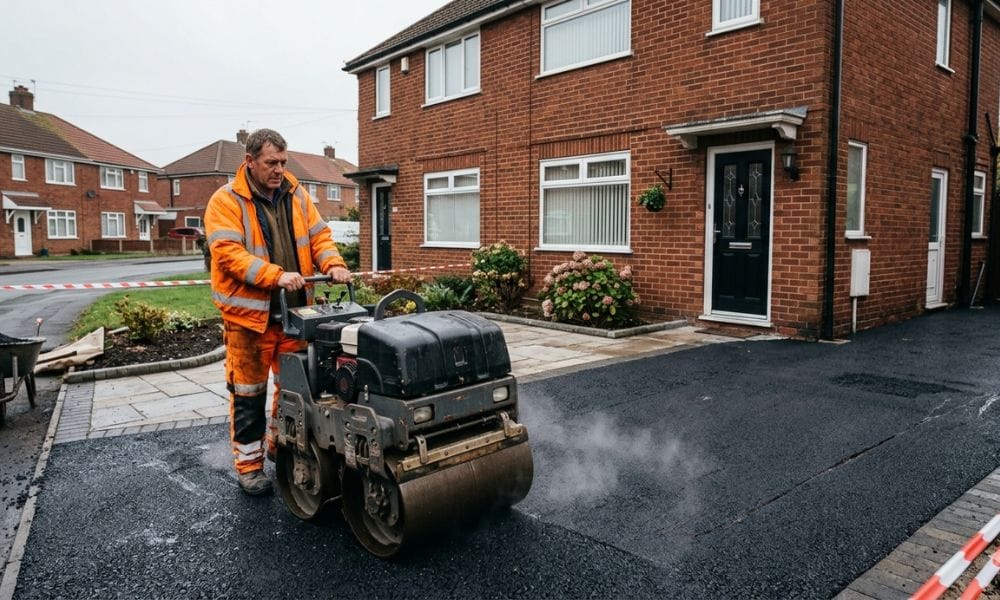
For an existing driveway in decent condition, the cheapest prevention is a stiff brush. Sweep the surface every few weeks, paying attention to edges, corners and anywhere leaves collect. In autumn this matters most. A layer of rotting leaves left over winter is a seedbed by spring.
A leaf blower does the same job faster on larger driveways. The point is simple: no organic matter on the surface means nowhere for seeds to germinate. This is the same principle that applies to cleaning block paving, where the joints between blocks give weeds far more opportunity than tarmac does.
Pull Weeds Early, and Get the Root
Walk your driveway once a month through the growing season. Any weed you spot in a crack or along an edge, pull it there and then. A young weed comes out whole. Leave it two months and the root will have worked deeper into the crack, widening it as it grows, and snapping the top off just encourages regrowth.
Use a weeding knife or hook for anything in a tight crack. Get the root out, and bin the weed rather than leaving it on the drive where it can drop seed. Ten minutes a month saves hours later.
Killing Weeds on Tarmac Without Damaging It
Boiling water
If you would rather avoid chemicals, boiling water is the simplest option. Poured directly onto a weed, it destroys the plant tissue and does no harm to the tarmac. It’s cheap and effective for the odd weed, though you may need a second application for deep-rooted perennials. Keep it away from bordering lawns and planting.
A note on vinegar and salt
Vinegar and salt are often recommended online, but they aren’t approved as weed killers in the UK, and salt in particular leaches into surrounding soil and stays there, damaging lawns and borders next to the drive. Neither kills roots reliably either. For anything boiling water and hand-pulling won’t shift, an approved weed killer is the better route.
When to use a proper weed killer
For an established infestation, a systemic weed killer such as a glyphosate-based product is the practical option. Systemic products are absorbed through the leaves and carried down to the root, which is what actually kills perennials like dandelion and horsetail rather than just burning off the top growth. Horsetail is notoriously resistant, so crush or bruise the stems before spraying to help the product penetrate.
Always follow the label. Apply on a still, dry day, keep pets and children off the area until it has dried, and spot-treat rather than blanket spraying. One treated weed is a dead weed. A soaked driveway is a waste of product.
What not to use on tarmac
- Weed burners. Tarmac is bound with bitumen, which softens with heat. A flame weeder held over the surface can mark it and loosen the stones.
- Diesel, petrol or solvents. Old-fashioned “remedies” like these dissolve the bitumen binder and leave a soft, damaged patch.
- A jet washer at close range. High pressure aimed into a crack can strip fine aggregate and make the crack wider. Keep the lance moving and well back from the surface.
Seal Cracks Before Weeds Find Them
Every crack in a tarmac surface is an invitation. Water gets in, freezes, widens the crack, and debris and seeds follow. Small cracks can be filled with a cold-lay repair compound or bitumen crack filler, and doing this each spring stops small defects becoming weed corridors. Pay particular attention to edges, which take the most stress and fail first. Well-fitted edging, whether concrete kerbs or block paving borders, protects the tarmac edge and physically blocks creeping weeds from the lawn or border alongside.
If cracking is widespread rather than isolated, patch repairs become a losing battle. Our article on how long a tarmac driveway actually lasts explains the signs that a surface is reaching the end of its life.
Resealing Helps, Within Reason
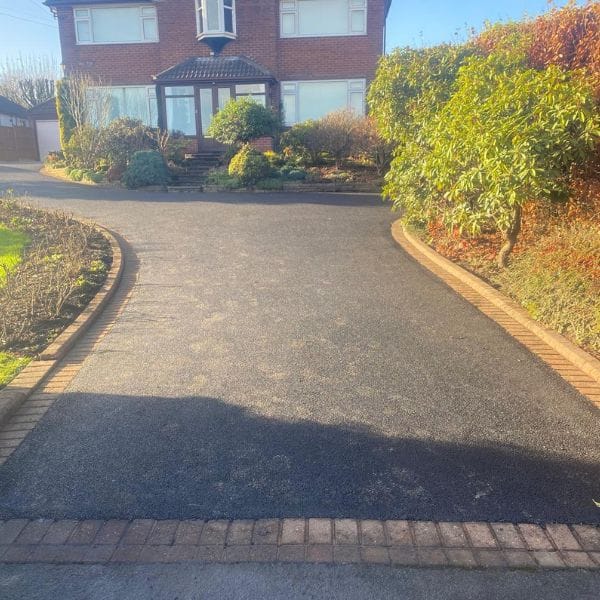
A quality tarmac restorer or sealer applied every few years does two useful things: it refreshes the black finish and it closes off the fine surface porosity where moss and seeds would otherwise take hold. Clean the driveway thoroughly first, kill and remove any existing weeds and moss, let the surface dry, then apply. It is not a magic barrier, and it will not fix a structurally failing surface, but on a sound driveway it makes weed establishment noticeably harder. There is more detail on the full care routine in our guide to maintaining a tarmac driveway.
A Year-Round Weed Prevention Checklist
| When | What to do |
|---|---|
| Spring | Fill any new cracks, check the edges, and spot-treat the first weeds as they appear |
| Summer | Walk the driveway monthly and pull young weeds with the root |
| Autumn | Sweep or blow leaves off every week or two, especially from corners and edges |
| Winter | Keep the surface clear of debris and look for frost damage or new cracks |
| Every few years | Clean thoroughly and reseal on a dry day |
The Honest Summary
A healthy tarmac driveway is one of the most weed-resistant surfaces you can have, which is one reason it remains so popular across Stoke-on-Trent, Crewe and Congleton. Weeds appearing in any number are almost always telling you something about the condition of the surface or the quality of the original installation. Sweep it, pull weeds early, fill cracks promptly and reseal every few years, and you will rarely have a problem.
If your driveway is past the point where maintenance makes sense, Ted and the team at Maughan Construction install new tarmac driveways from £100 per square metre across Stoke-on-Trent, Newcastle-under-Lyme, Stafford, Crewe, Congleton and Biddulph, always with a weed control membrane as standard, no deposit required until you are completely satisfied, and backed by 400+ five-star Google reviews. Request a free quote or call 07500 042119 or 01782 607715.
Frequently Asked Questions
Weeds rarely grow through sound tarmac. They come up through cracks, joints and edges where the surface has been damaged, or germinate in dirt and leaf debris sitting on top. If weeds are appearing across the whole surface, it usually points to a thin layer or a poor sub-base without a weed control membrane.
Yes. A geotextile membrane laid beneath the sub-base blocks light and physically stops roots pushing up from below. It is the single most effective prevention measure and should be fitted as standard on any new tarmac driveway installation.
Boiling water works well on small, young weeds and won’t harm the tarmac. Vinegar and salt are often suggested, but they aren’t approved as weed killers in the UK and salt damages nearby soil and planting. Neither reliably kills the roots of deep perennials like dandelions or horsetail, so stubborn growth needs pulling out by the root or a spot-treatment with an approved systemic weed killer.
A standard water-based systemic weed killer will not harm tarmac when used as directed. Avoid diesel, petrol, oil-based or solvent-based products, which dissolve the bitumen binder and soften the surface. Spot-treat individual weeds rather than soaking the whole driveway.
It’s best not to. Tarmac is bound with bitumen, which softens with heat, so a flame weeder held over the surface can mark it or loosen the stones. Pull the weed out or spot-treat it with a weed killer instead.
Remove the full root, fill any cracks the weed was growing through, and keep the surface swept clear of leaves and dirt so new seeds have nowhere to germinate. Resealing the driveway every few years also makes it harder for moss and weeds to establish.
Yes, horsetail (mare’s tail) is common across North Staffordshire and is one of the hardest weeds to kill. Its roots can reach deep into the ground and it will exploit any crack or gap. Persistent horsetail coming through tarmac usually means the surface or sub-base is compromised and worth a professional inspection.